Essential Modular Building Blocks for Desktop Robot Prototyping
High-precision micro-sensors, voice processing transceivers, and human-machine capacitive interfaces engineered specifically for ESP32, Arduino, and Reachy Mini desktop robot architectural ecosystems.
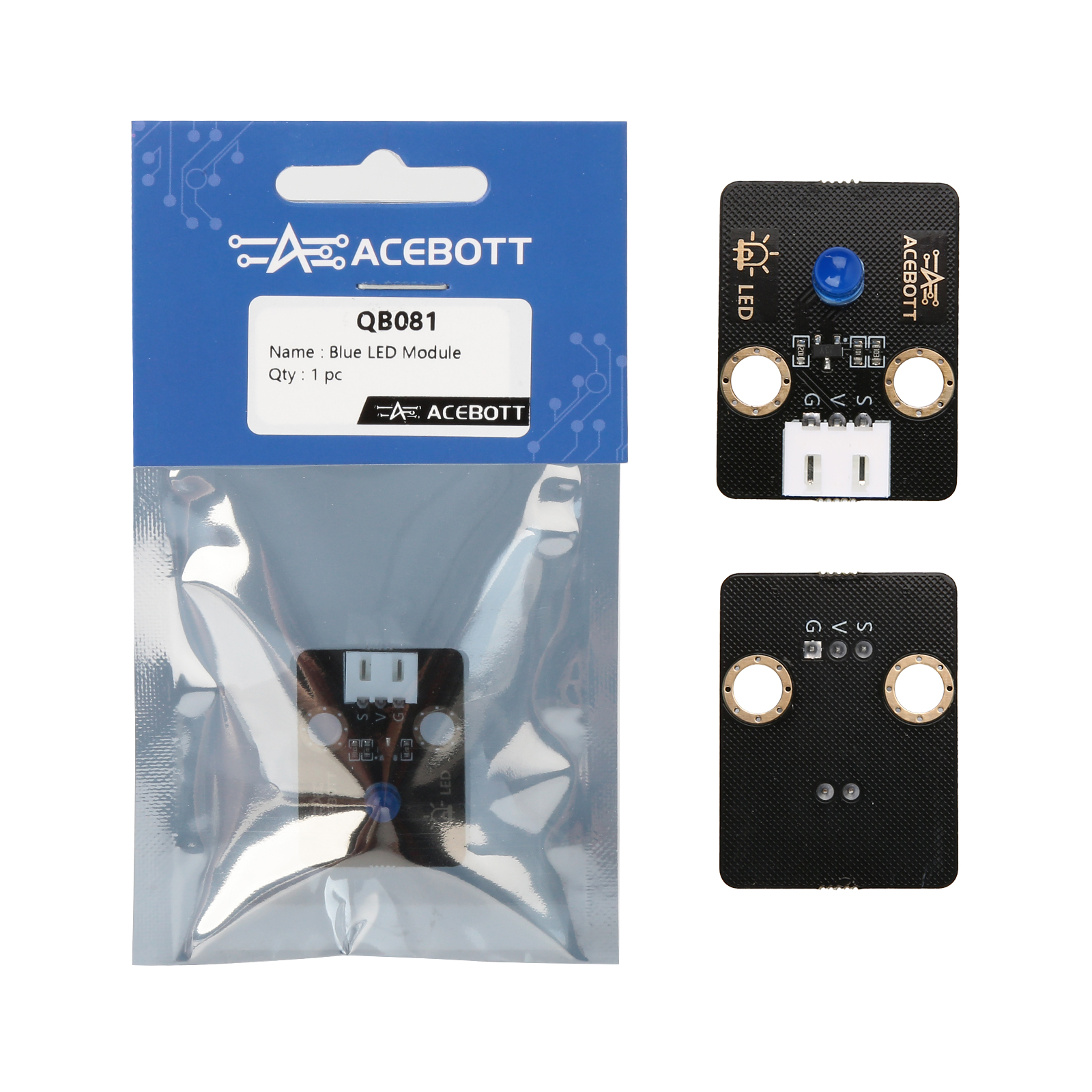
ACEBOTT OEM Wholesale 5mm Blue LED Light Module STEM Component
Digital output luminescence block ideal for status-indication telemetry, robotic optical signaling, and breadboard logic debugging on Arduino and ESP32 controllers.
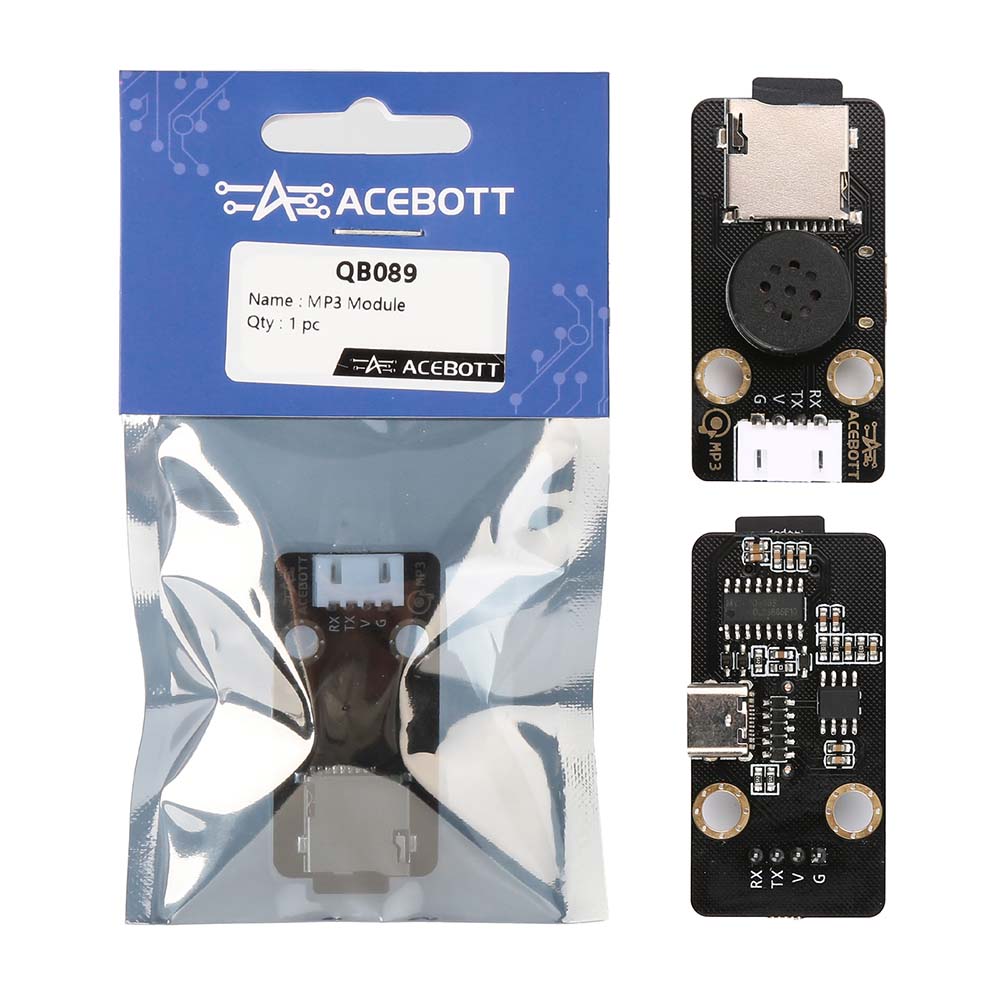
ACEBOTT OEM MP3 Voice Broadcast Module 5V 128MB Micro-SD
Dedicated audio decoder with onboard amplifier and flash storage. Enables lifelike desktop robot speech responses, alert dispatching, and acoustic interactive feedback.
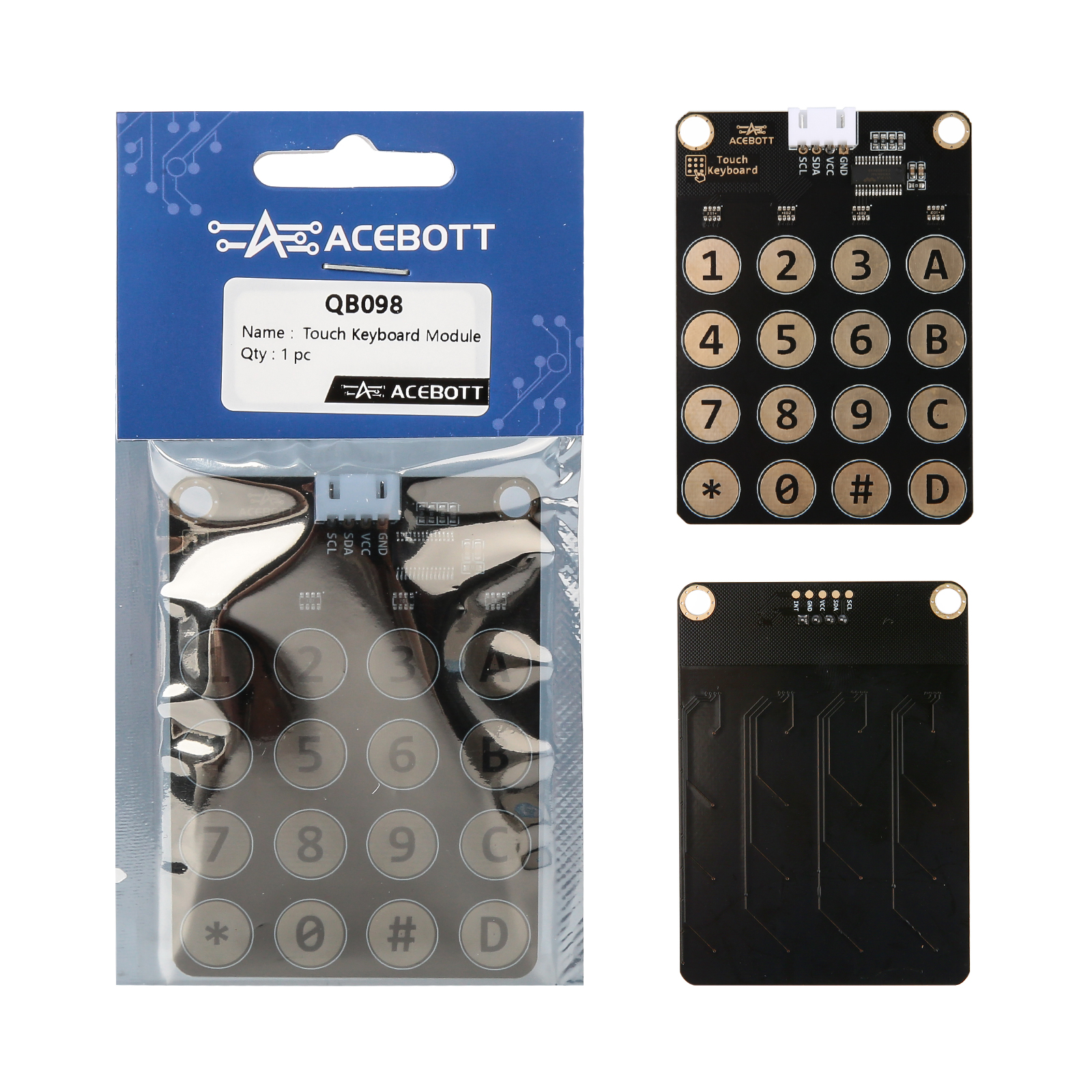
ACEBOTT 4*4 Capacitive Touch Matrix Keypad Membrane Switch
Sixteen-point tactile input matrix engineered for robotic arm mode selection, coordinate zeroing, teaching-pendant inputs, and security bypass configurations.

ACEBOTT 650nm 5mW Laser Head Distance Sensor Module
Precision red dot collimated optical source designed for robotic end-effector targeting, spatial edge triangulation, and collision containment on multi-axis desktop rigs.

ACEBOTT 760nm~1100nm Digital Output Infrared Flame Sensor
Wide-spectrum infrared combustion detection block. Vital for academic robotics competitions, lab safety shutdown loops, and environmental monitoring smart machines.
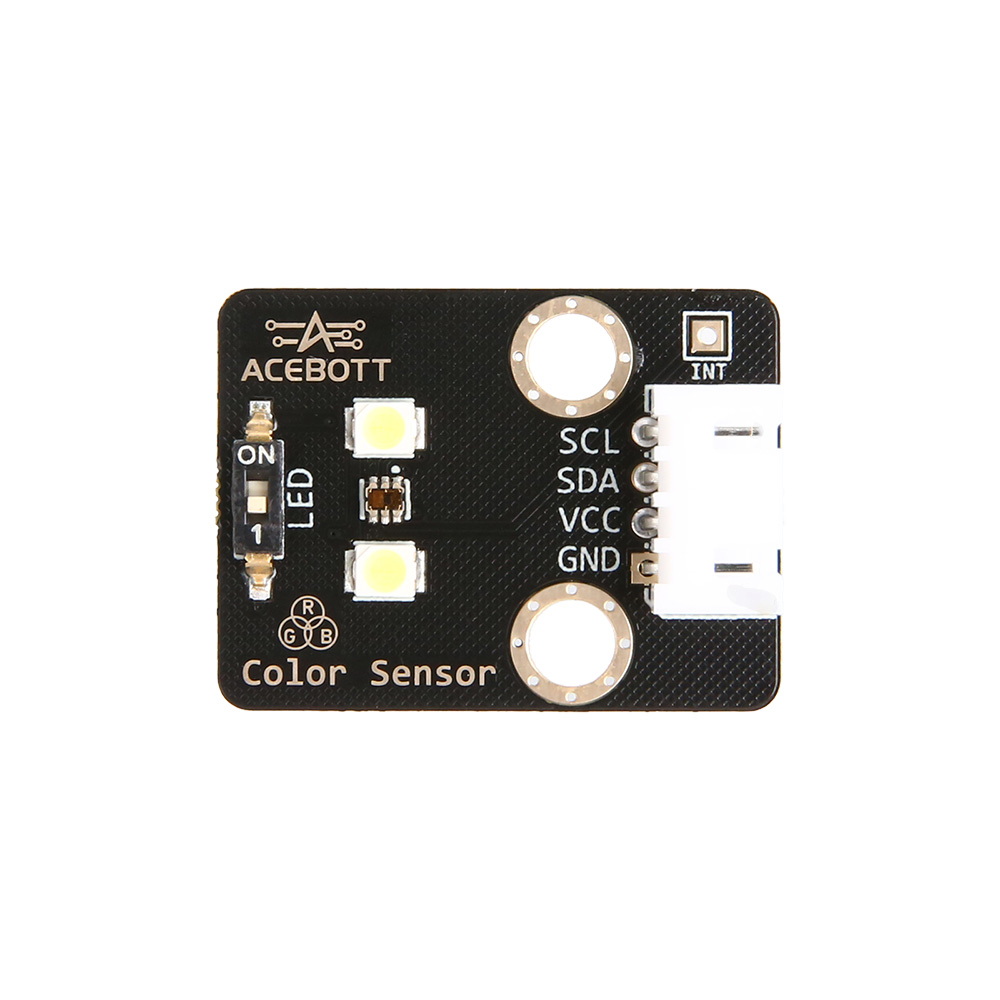
ACEBOTT RGB Optical Color Sensor Induction Module
Chromatic wavelength analyzer delivering accurate R/G/B color discrimination. Enables pick-and-place sorting for robotic end effectors and automated conveyor tracking.

ACEBOTT 12x12mm Big Key Light Touch Switch Module
High-cycle mechanical tactile pushbutton with integrated pull-down resistor. Essential for emergency stops, limit switches, and physical user confirmation buttons.
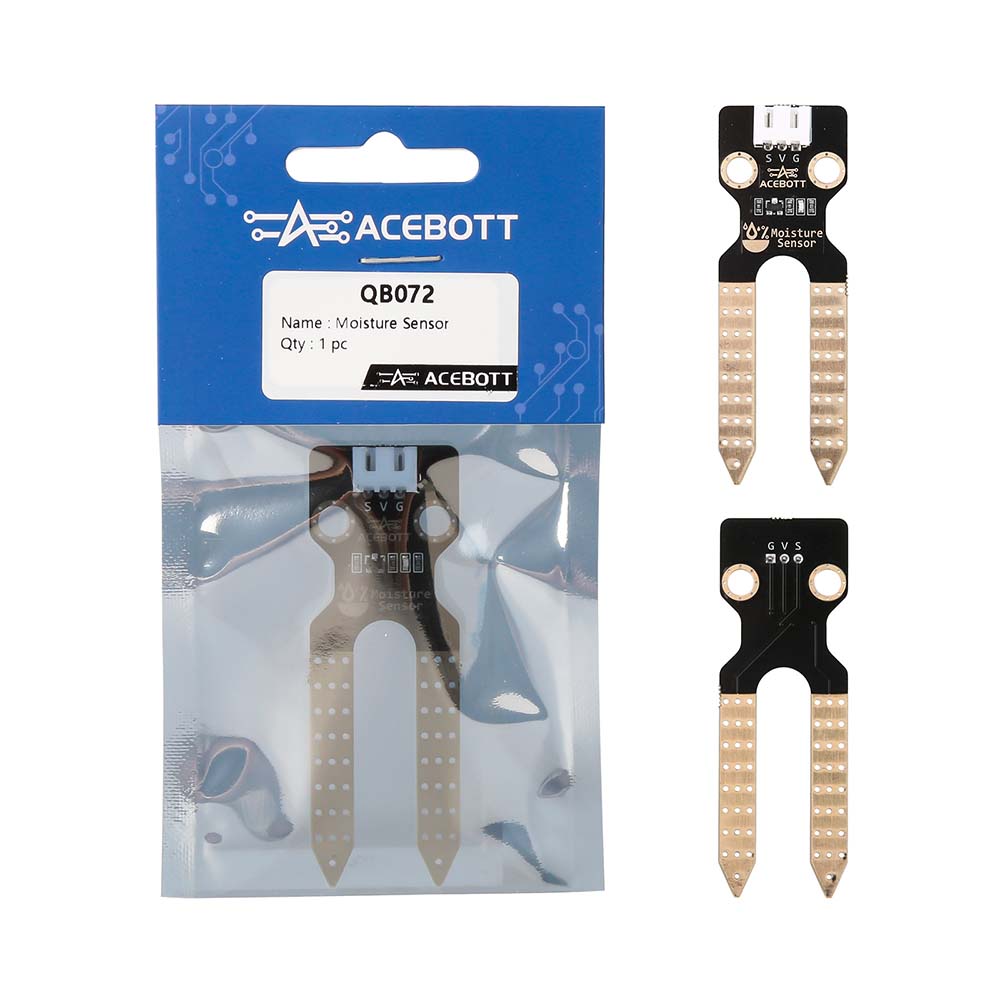
ACEBOTT Analog Soil Moisture Humidity Detection Sensor
Resistive volumetric soil moisture probe engineered for biological robotics projects, smart greenhouse mobile robots, and automated plant husbandry arms.
1. Architectural Evolution: From Novelty Desktop Toys to High-Precision Kinematic Platforms
The international demand for desktop robots has transitioned from passive desktop display models to active, open-architecture mechatronic platforms. Known globally as the Reachy Mini desktop robot paradigm, these compact systems simulate bio-inspired kinematics, multi-axis robotic manipulation, and artificial intelligence-driven human-machine interaction within a footprint that sits safely on an engineering workstation or classroom desk. In the competitive landscape of robotics manufacturing, sourcing from direct China manufacturers—specifically situated within the Pearl River Delta electronics corridor—offers international distributors, universities, and enterprise labs an unmatched balance of bill-of-materials (BOM) cost efficiency, rapid prototyping turnaround, and industrial-grade microcontroller integration.
At Shenzhen Reachybott Co., Ltd. (operating with brand lines such as ACEBOTT and Reachy Mini Bot ecosystems), robotics engineering is rooted in democratizing advanced hardware control. Rather than locking buyers into proprietary software silos, cutting-edge Chinese suppliers focus on modular firmware architectures powered by dual-core ESP32 microcontrollers and Arduino-compatible peripheral ecosystems. The inclusion of open hardware interfaces allows developers to transition effortlessly between graphical block coding (Scratch 3.0) for K-12 STEM deployment, MicroPython for rapid prototyping, and high-performance C++ or ROS 2 (Robot Operating System) nodes for university-level computer vision and kinematic trajectory research.
Key Procurement Insight: Total Cost of Ownership (TCO) in Desktop Robotics
Purchasing desktop robots is no longer simply an evaluation of landed unit price. Forward-looking procurement directors evaluate Hardware Extensibility, Pinout Standardization, and Curriculum Lifecycle Support. A modular robot that utilizes standardized I2C, SPI, and GPIO sensor building blocks reduces long-term maintenance costs and permits multi-year curriculum upgrades without scrapping underlying servo chassis.
2. Desktop Robot Topologies: Kinematic Specifications & Architectural Comparison
Modern desktop robot factories in China supply several distinct mechanical topologies, each customized for specific instructional or research objectives. Determining the correct platform requires understanding the dynamic loads, degrees of freedom (DOF), and controller requirements:
| Robot Architecture | Degrees of Freedom (DOF) | Primary Microcontroller | Communication Bus | Kinematic Complexity | Target Deployment |
|---|---|---|---|---|---|
| Reachy Mini Bio-Inspired Head & Torso | 4 to 7 DOF (Neck / Eyes / Antennas) | Dual-Core ESP32-WROVER | Wi-Fi 802.11 b/g/n, BLE 5.0, UART | Spherical & Differential Yaw/Pitch | Human-Robot Interaction (HRI) |
| Desktop Articulated Arm (ACEBOTT 4DOF) | 4 DOF + Parallel Gripper | ESP32 / ATmega328P | I2C, PWM Bus, Wi-Fi Web Server | Inverse Kinematics (Trigonometric / Jacobian) | Industrial Sorting / Pick-and-Place |
| Quadruped / Spider Desktop Walker | 8 to 12 DOF (2-3 Servos per Leg) | ESP8266 / ESP32 | Wi-Fi Direct, Mobile App Socket | Sinusoidal Gait Sequence Coordination | Bio-Locomotion & Dynamics |
| Smart Traffic & Urban Automation System | Stationary Multi-Actuator Array | ESP32 Dual Core with Flash | Bluetooth Mesh, MQTT, HTTP REST | State Machine & Distributed Logic | Smart City & IoT Infrastructure |
| Modular Wheeled Exploration Robot Car | 2WD / 4WD + Pan-Tilt Sensor Deck | ESP32 IoT Development Core | Infrared Remote, Wi-Fi FPV, BLE | Differential Drive Odometry | SLAM Navigation & Sensor Fusion |
3. Strategic Procurement Trends in Desktop Robotics (2025–2030 Horizon)
Procurement specialists and brand owners sourcing educational and desktop service robots from China must align their purchase orders with four defining technological megatrends dominating the next half-decade:
On-Device Edge TinyML
Integration of lightweight TensorFlow Lite Micro models onto ESP32-S3 silicon, enabling local offline gesture recognition, keyword spotting, and facial orientation tracking without external cloud reliance.
Bus Servo Serialization
Transitioning from fragile analog PWM pulse servos to digital serial bus servos (RS-485/half-duplex UART) featuring 12-bit magnetic encoders, real-time temperature feedback, and multi-turn positioning telemetry.
Micro-ROS Multi-Agent Interoperability
Native Micro-XRCE-DDS client compilation directly onto desktop microcontrollers. Desktop bots function as distributed nodes within larger enterprise ROS 2 Humble/Iron industrial automation fleets.
Sustainable & Repairable BOMs
Strict adherence to Right-to-Repair mandates in EU and North American markets. Modular clip-together wiring harnesses, laser-cut birch/bamboo chassis alternatives, and readily available component spare bags.
4. Factory Verification, Production Capacity & OEM/ODM Engineering Workflow
When evaluating suppliers for desktop robots in China, separating trading agents from genuine manufacturing enterprises with R&D infrastructure is the single most critical risk-mitigation step. Headquartered in Tairan Technology Park, Shenzhen, with automated manufacturing facilities spanning 3,000 to 5,000 square meters, Shenzhen Reachybott Co., Ltd. exemplifies verified manufacturing capacity:
In-House SMT & Assembly
Dual-lane surface-mount technology (SMT) pick-and-place lines produce proprietary controller boards, sensor breakout modules, and power distribution PCBA under strict ESD-controlled parameters.
Full-Cycle Quality Control (QC)
Every servo undergoes continuous 72-hour burn-in stress testing, torque attenuation testing, and cold-solder automated optical inspection (AOI) prior to final kitting and sealing.
Onsite Verified Trade Credentials
Alibaba-audited facility with publicly accessible trade histories, high transaction ratings (4.8/5), and full compliance with CE, RoHS, FCC, and EN71 international safety directives.
OEM / ODM White-Label Customization Workflow
Step 1: Specification Freeze — Define degrees of freedom, chassis material (anodized AL5052, injection ABS, or precision-cut acoustic wood), and core chipset.
Step 2: Rapid Functional Prototyping — 7-day engineering samples with working firmware, customized boot screens, and circuit protections.
Step 3: Private Label Branding — Spot-color silkscreening, customized box art, blister tray optimization, and localized step-by-step manuals.
Step 4: Pilot Batch & Global Delivery — Initial validation run from 100 units through volume container consolidation via FOB, CIF, or door-to-door DDP air/sea freight.

Frequently Asked Questions for B2B Robotics Buyers
Clear, direct answers regarding custom firmware flashing, minimum order quantities (MOQ), international certifications, and cross-border commercial terms.
Accelerate Your Desktop Robotics Supply Chain
Request our comprehensive 2025–2026 OEM/ODM Hardware Catalog, engineering BOM checklists, and factory direct volume pricing schedules. Talk directly with our Shenzhen engineering specialists today.