Why Global Educational Buyers are Moving Beyond Wheeled Bots to Bipedal Kinematics
A comprehensive analysis of mechanical stability, computational gait algorithms, and educational ROI in secondary and collegiate STEM curricula.
In the evolving landscape of STEM hardware procurement, educational institutions face an pedagogical ceiling with wheeled robotic cars. Wheeled systems teach basic differential drive logic, but they fail to represent dynamic physical systems found in modern automation, biomechanics, and bipedal humanoid robotics. The modern STEM biped robot kit has emerged as the definitive hardware solution because it compels students to navigate physical equilibrium, trigonometric inverse kinematics, center of mass (CoM) trajectory control, and PWM pulse synchronization across multiple articulated joints.
Biomechanical Joint Articulation
A standard 4-DOF or 6-DOF STEM biped robot kit mimics human sagittal and frontal plane mechanics. By pairing ankle-roll and hip-pitch servos, students manipulate geometric pivot angles to prevent tipping. Rather than executing simple binary motor commands, learners program oscillatory waveforms (sine and cosine gait modulators) in Arduino IDE or Scratch 3.0, learning firsthand how harmonic motion generates smooth forward, backward, and turning locomotion.
Real-Time ESP32 Dual-Core Processing
Dynamic balance requires immediate algorithmic processing. Wheeled toys can tolerate millisecond timing jitter, but bipedal robots fall when servo coordination lags. Shenzhen Reachybott Co., Ltd. incorporates high-speed ESP32 microcontrollers featuring dedicated FreeRTOS tasks: Core 0 executes high-frequency servo interpolations, while Core 1 handles Wi-Fi web-server communications, sensor telemetry, and smartphone app control.
For educational procurement specialists, distributing a biped kit is not simply about stocking another toy; it is about providing a multi-tiered learning instrument. An entry-level class can assemble the pre-cut acrylic or precision injection-molded components, connecting servos with idiot-proof color-coded wiring. Intermediate students explore block coding to choreograph complex dances and obstacle-avoidance routines. Advanced university engineering programs tap directly into the open-source C++ codebase to inject PID balance compensation routines utilizing external 6-axis IMU sensors.
Product Recommendations
Factory-Engineered Biped & Biomimetic Robot Kits
Engineered for structural durability, cross-compiler flexibility, and direct classroom deployment. Sample orders available from 1 piece with global B2B supply.
Core Flagship
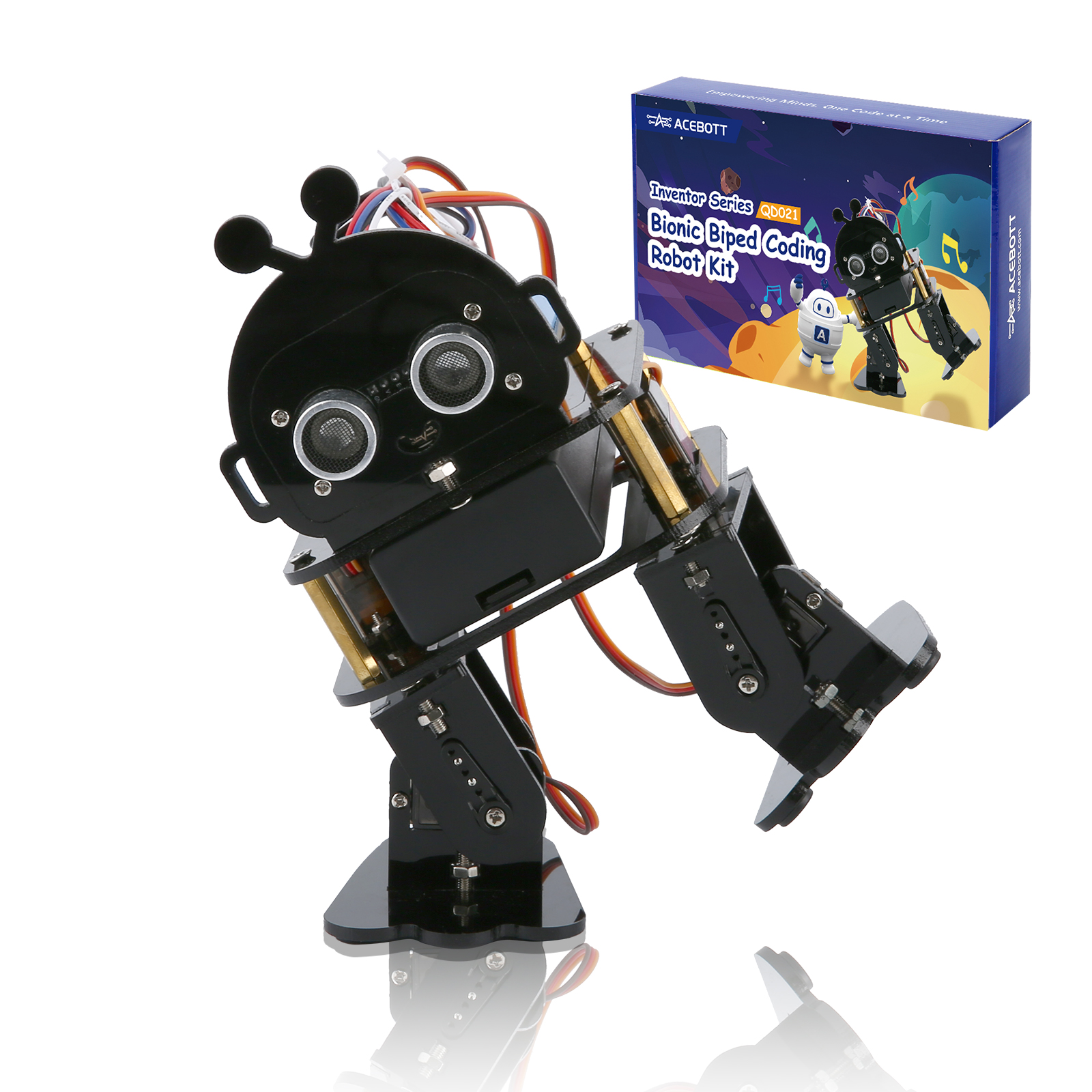
ESP32 IoT STEM Biped Robot Kit
Our premier bipedal platform engineered for secondary schools and makerspaces. Features calibrated metal-gear servos, integrated Wi-Fi app remote telemetry, ultrasonic distance detection, and step-by-step gait tutorial modules.
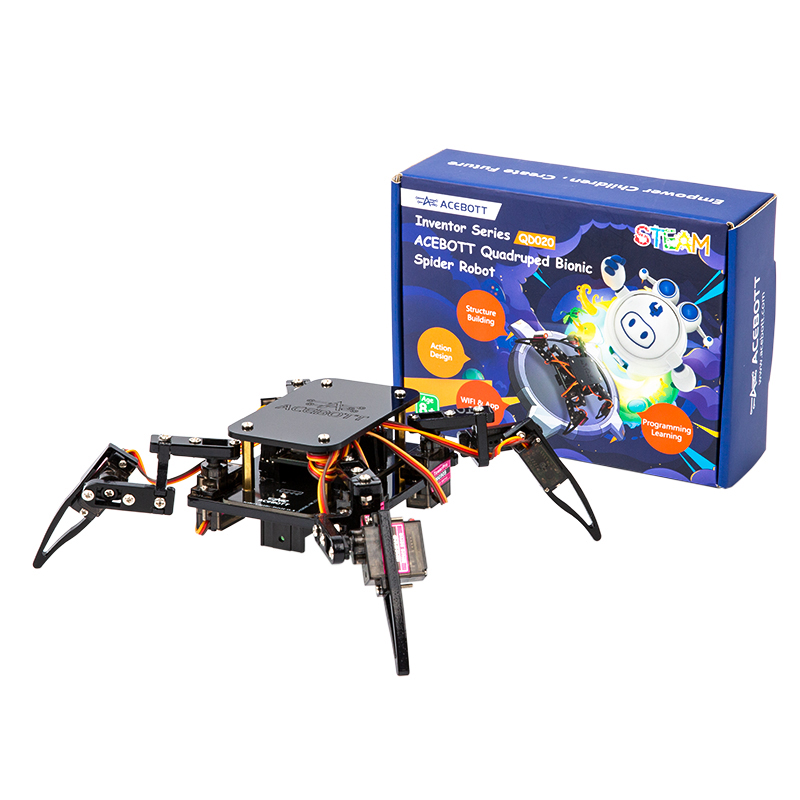
A multi-legged walking platform designed for introductory multi-servo phase mechanics. Incorporates ESP-based wireless control and dynamic crawl-gait algorithms to teach stable poly-legged locomotion principles.
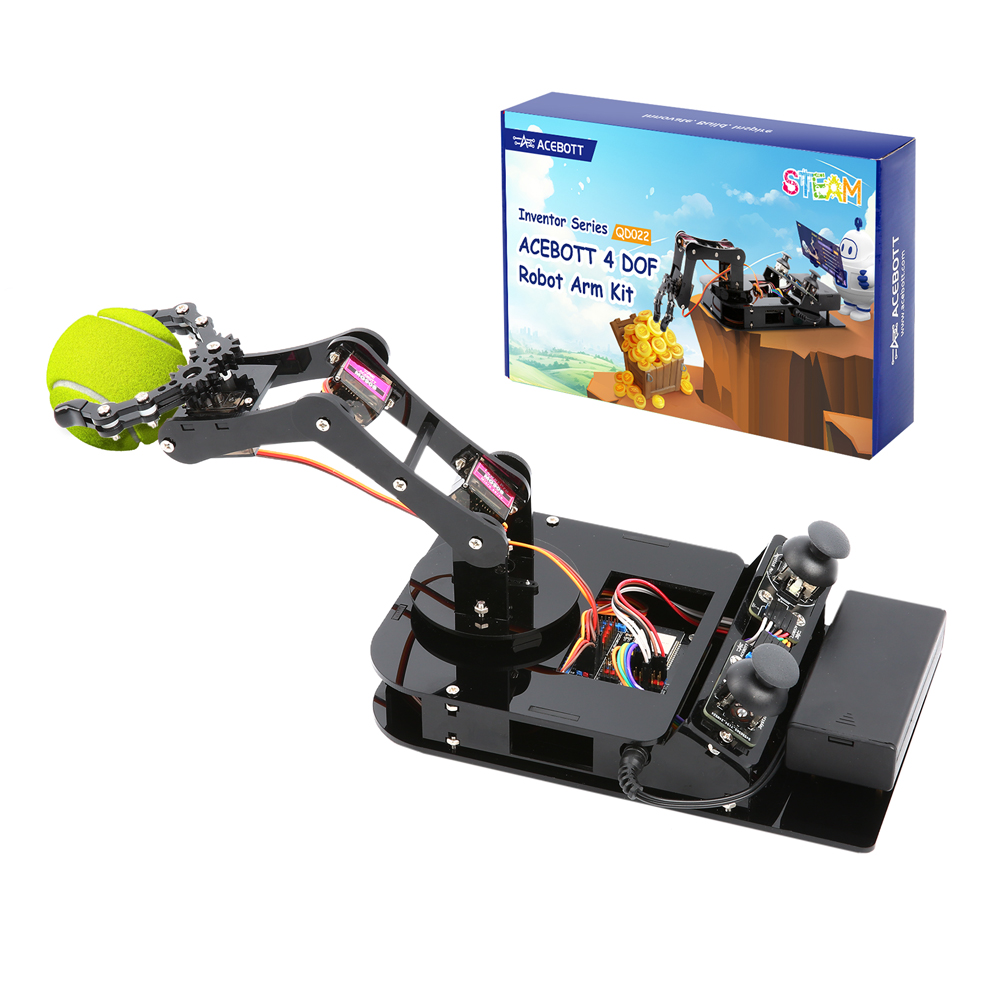
Designed to complement bipedal kinematics curricula by introducing Cartesian coordinate manipulation, inverse kinematic pick-and-place algorithms, and programmable memory pathways.
Future Procurement Trends for STEM Biped Robot Kits
Insights for institutional purchasers, government tender bidders, and robotics brands navigating 2025–2030 supply chain dynamics.
Trend 01 · Silicon Shift
Migration from 8-bit MCUs to Dual-Core 32-bit ESP32 & RP2040
Procurement bids in Europe and North America now consistently penalize outdated 8-bit architectures. Buyers demand 32-bit computing capable of hosting embedded FreeRTOS, on-device web servers, and future-proof micro-ROS nodes. Sourcing kits equipped with the ESP32 eliminates obsolescence risk and enables OTA (Over-The-Air) classroom firmware updates.
Trend 02 · Sustainability
High-Durability Metal Gears vs. Disposable Plastic Drive Trains
Schools operate under tight annual budgets; broken nylon servo gears during initial assembly generate devastating customer review ratings for distributors. Procurement channels are transitioning en masse to hybrid and full-metal gear servos equipped with internal thermal cutoff circuits, elevating product lifetime from weeks to several academic years.
Trend 03 · Turnkey Pedagogy
Demand for Complete Turnkey Educational Ecosystems
Hardware without curriculum is becoming unsellable in tier-one educational markets. Modern RFP (Request for Proposal) criteria mandate structured lesson plans, teacher slide decks, step-by-step schematics, and mapped alignment with NGSS (Next Generation Science Standards) and European CSTA computational thinking benchmarks.
Trend 04 · Modularity
Universal Snap-and-Bolt Expansion Standards
Educational buyers reject closed proprietary systems. Biped kits must support I2C sensor expansions, standardized servo horns, and Lego-compatible or M3-spaced chassis mounting holes. This allows educators to bolt on AI vision sensors, LiDAR rangefinders, or environmental monitoring sensors without structural redesigns.
Trend 05 · Strict Compliance
Battery Compliance, Toxicological and Safe Handling Approvals
Import authorities (EU Customs, US CPSC) have tightened scrutiny around lithium-ion battery safety and electronic flammability. Procurement directors now prioritize manufacturers with verifiable MSDS, UN38.3, CE-RED, RoHS 2.0, and EN71/ASTM toy and laboratory safety certifications before releasing purchase orders.
Trend 06 · Localization
Bespoke Private-Labeling for Regional Education Providers
Distributors increasingly demand white-label and private-label packaging customized with domestic languages, regional curricula logos, and specific component sets. Direct Shenzhen factories with agile SMT and packing lines offer a decisive margin advantage over middleman brokers.
Technological Horizon
Technological Development Trends: Where Bipedal Educational Robotics is Headed
Examining tinyML at the edge, inverse kinematics automation, and generative AI interfaces transforming student desk robots.
The rapid acceleration of artificial intelligence and machine learning is reshaping the technical roadmap of educational robotics. A STEM biped robot kit is no longer an isolated mechanical novelty; it is rapidly transforming into an embodied physical agent connecting cloud intelligence with real-world kinetic reactions.
Edge AI Vision & TinyML Integration
Future iterations of educational biped robots are incorporating low-power neural network accelerators like the ESP32-S3 or Kendryte K210. This empowers the biped to perform facial detection, color tracking, and hand-gesture recognition locally without continuous cloud connection. A biped robot can dynamically track a student’s hand or adjust its balance according to terrain recognition processed right at the edge.
Generative LLM Voice & Personality Layers
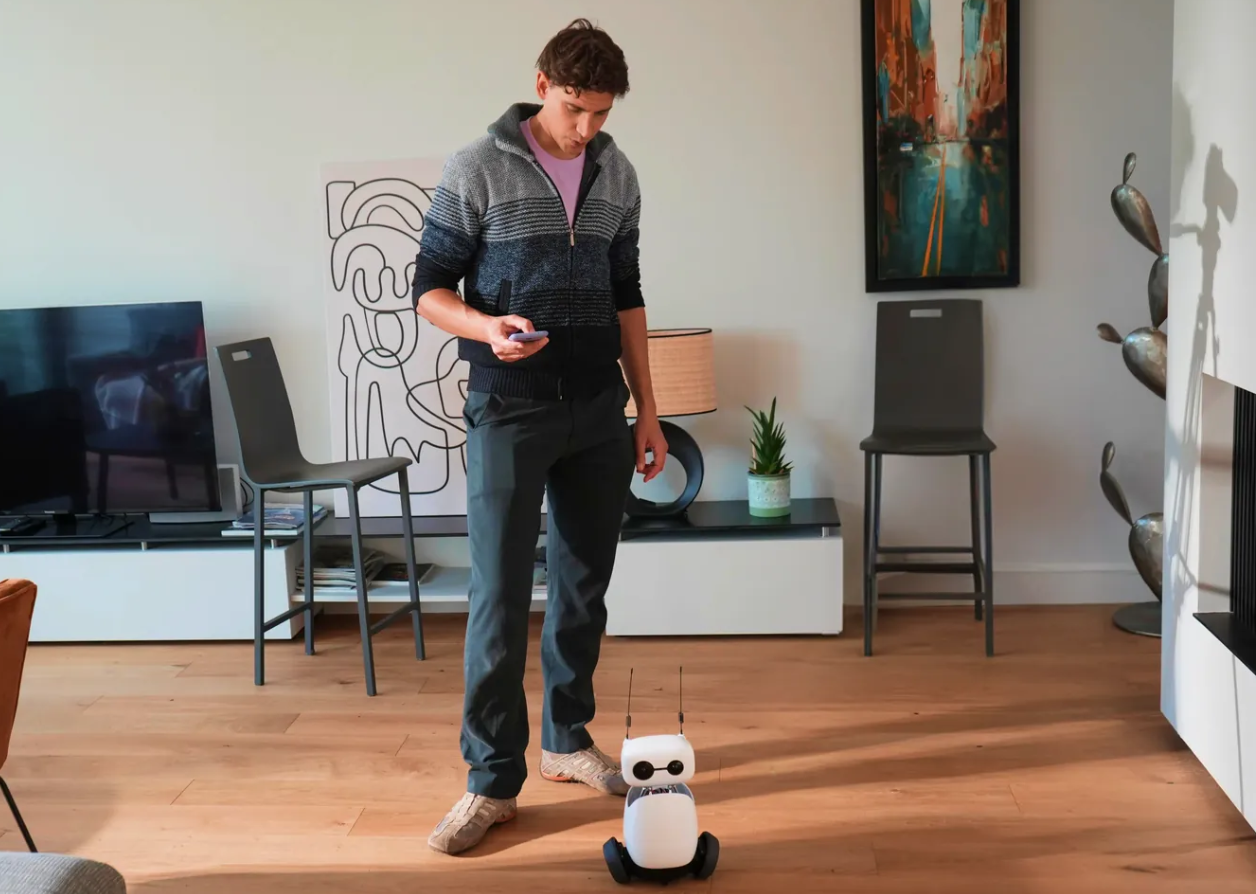
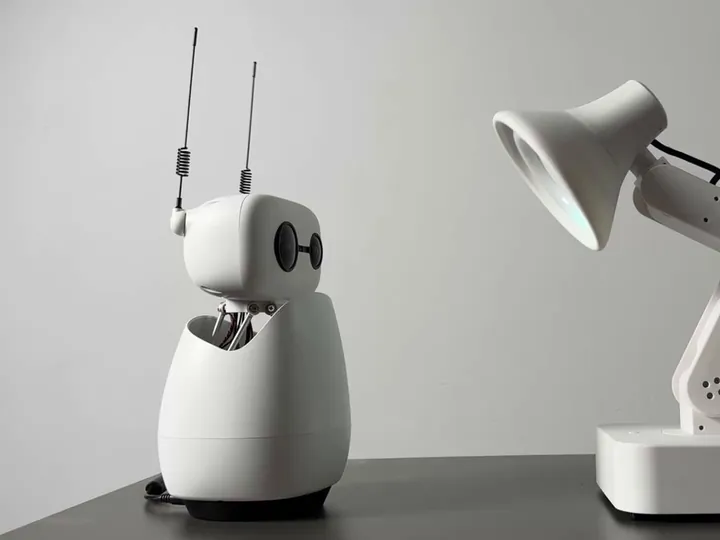
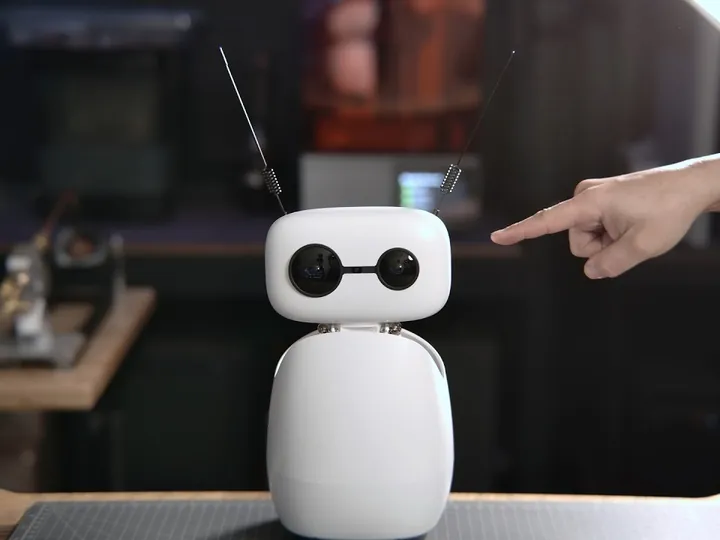
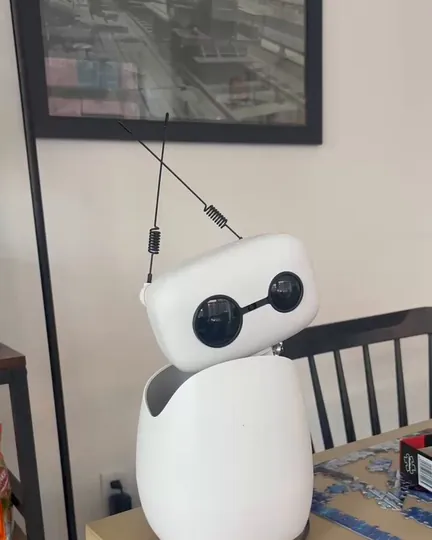
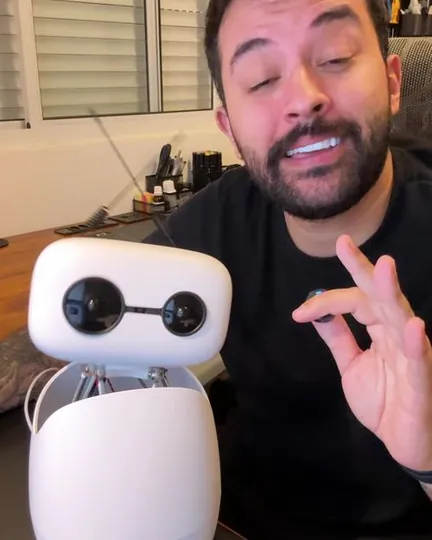
As illustrated across the open-source robotics maker community, desktop biped and companion robots are becoming voice-interactive. By utilizing lightweight WebSocket connections to language models, the biped robot transforms into an inquisitive desktop study partner capable of explaining coding errors, translating foreign phrases, and emoting through dynamic body gestures.
Furthermore, actuator technology is undergoing a revolution. Traditional hobby servos are progressively yielding to magnetic-encoder bus servos. Bus servos reduce cable clutter by daisy-chaining all limb joints along a single serial wire, while delivering real-time sensory feedback—including joint angle, temperature, voltage, and external resistance. This enables students to physically grasp the robot, record joint sequences by hand ("teach-and-playback"), and analyze biomechanical strain curves in graphical classroom software.
Shenzhen Manufacturing Excellence
Shenzhen Reachybott Co., Ltd.: Your Direct Engineering & Sourcing Partner
Established with foundational R&D roots in Shenzhen dating back to 2013, Shenzhen Reachybott Co., Ltd. operates as an integrated manufacturer and trading innovator. We eliminate supply chain opacity by combining structural industrial design, electronic circuit development, firmware programming, SMT assembly, and strict multi-stage quality assurance within our dedicated 3,000+ square meter factory facilities.
Comprehensive Onsite-Checked Verification
Our production facilities, testing equipment, and export operations are verified onsite by international auditing inspectors on Alibaba.com, securing an exceptional 4.8/5 global buyer rating.
Direct Control Over SMT & Component BOM
Unlike trading intermediaries, we source directly from tier-one semiconductor suppliers and maintain our own automated pick-and-place lines. This guarantees batch-to-batch hardware stability and price protection against market volatility.
Our dedicated educational engineering team authors comprehensive laboratory tutorials with graphical diagrams, eliminating troubleshooting headaches for classroom teachers and resellers.
Full OEM / ODM Contract Customization
From customized silk-screened logos and localized full-color retail packaging to customized sensor payloads and branded software apps, we build your brand's unique educational footprint.
Direct answers to technical queries, minimum order quantities, compliance certifications, and curriculum integration.
Why choose a STEM biped robot kit over traditional wheeled or tracked robotics for educational institutions?
A STEM biped robot kit bridges elementary coding and advanced biomechanical engineering. While wheeled cars teach basic motor logic, biped systems challenge students with physical equilibrium, center of mass (CoM), zero moment point (ZMP), inverse kinematics, and multi-servo phase coordination. This multi-layered curriculum allows schools to use a single hardware investment across junior coding clubs, high school physics courses, and collegiate robotics laboratories.
How does the Reachybott biped robot kit solve servo calibration and zero-offset errors during student assembly?
Servo calibration error is the #1 point of failure in student-assembled robotics. Shenzhen Reachybott Co., Ltd. resolves this through a dual-safeguard engineering approach: First, our ESP32 motherboard features a factory "One-Button Servo Neutralization" routine that automatically drives all connected servos to exactly 90 degrees prior to horn mounting. Second, our open-source software includes a visual web-slider calibration interface where students can fine-tune mechanical offsets into the ESP32’s non-volatile flash memory (NVS), ensuring upright posture without manual reassembly.
What are the minimum order quantities (MOQ) and lead times for OEM private-label branding?
We believe in lowering entry barriers for educational distributors. Standard unbranded or Reachybott-branded evaluation samples can be ordered starting from 1 single piece. Custom silk-screen branding on the robot chassis begins at an accessible MOQ of 100 units. Full private-label customization—including localized retail packaging boxes, bespoke color palettes, translated curriculum workbooks, and custom SSID firmware—starts at 500 units with typical production turnaround times between 15 and 25 working days.
What battery safety standards and shipping compliance documentation do you provide for cross-border import?
Cross-border customs delays are prevented through strict regulatory compliance. All Shenzhen Reachybott Co., Ltd. STEM robot kits can be configured with or without certified lithium cells according to your freight preferences. When shipped with batteries, kits are backed by authentic UN38.3 test summaries, MSDS documentation, and 1.2-meter drop-test packaging compliance certificates for compliant air and ocean freight. Kits hold CE (EN71, EN62115, RED), FCC, and RoHS 2.0 laboratory certifications for seamless European and North American customs clearance.
Can your STEM biped robot kit firmware be modified for advanced university robotics or ROS2 integration?
Yes. The kit’s ESP32 dual-core core architecture is completely non-proprietary. Developers can program it using standard Arduino IDE libraries, Espressif ESP-IDF native C/C++, or MicroPython. Furthermore, because ESP32 natively supports micro-ROS client libraries over Wi-Fi, collegiate researchers can expose the biped’s servo joints as ROS2 actuators, receiving high-level trajectory commands from a master Linux/Ubuntu PC running RViz and Gazebo kinematic simulations.
How does Shenzhen Reachybott ensure servo gear longevity against repeated dynamic impact shocks?
Unlike cheap toy robots using plastic nylon cogs that strip under foot-strike impact, Reachybott equips its biped robots with custom-specified copper-aluminum composite metal gear micro servos. These servos deliver high continuous torque ratings (2.5 kg·cm stall force), feature internal overload thermal shutdown logic, and are housed in shock-absorbing acrylic chassis mounts that damp ground-reaction vibrations during continuous classroom walking cycles.
What commercial Incoterms and international payment options do you support?
Shenzhen Reachybott Co., Ltd. offers full flexibility for institutional procurement officers and commercial freight forwarders. We support EXW, FOB Shenzhen/Hong Kong, CIF, CFR, DDU, and hassle-free DDP (Delivered Duty Paid) directly to your warehouse. Accepted payment mechanisms include secure Telegraphic Transfer (T/T), Letters of Credit (L/C), PayPal, Western Union, and Alibaba Trade Assurance in multiple currencies including USD, EUR, GBP, AUD, and CAD.
Ready to Elevate Your Educational Robotics Catalog?
Request comprehensive wholesale pricing, review full servo kinematics schematics, and discuss tailored OEM/ODM curriculum configurations with Shenzhen Reachybott Co., Ltd. engineers today.