The Global Buyer Guide to ESP32 Smart Robot Kit Architecture, OEM Scaling, and STEM Curriculum Integration
Deep-dive technical evaluation, Bill of Materials (BOM) auditing, production scalability, and AIoT roadmaps engineered by Shenzhen Reachybott Co., Ltd.
Why the ESP32 Smart Robot Kit Has Become the Benchmark for Educational Robotics
Over the last decade, educational robotics transitioned from rudimentary electro-mechanical assemblies into distributed cyber-physical systems. Modern procurement directors, national educational ministries, and retail brand distributors face a common challenge: legacy 8-bit microcontrollers (such as ATmega328P architectures) cannot handle concurrent network operations, on-device machine learning inference, real-time telemetry streaming, and encrypted communications.
As an industry-leading manufacturer headquartered in Shenzhen's core technology corridor, Shenzhen Reachybott Co., Ltd. champions the migration to the dual-core 32-bit Xtensa LX6/LX7 architecture. The ESP32 smart robot kit ecosystem merges high computing density (up to 240 MHz clock speeds), 520 KB SRAM, integrated 2.4 GHz Wi-Fi 802.11 b/g/n, and Bluetooth v4.2 BR/EDR & BLE into a cost-efficient physical computing platform. This allows educational providers to run multi-threaded FreeRTOS control loops—handling motor kinematics and sensor fusion on Core 0 while processing micro-webserver requests, WebSocket telemetry, and visual frame recognition on Core 1.
Dual-Core Hardware Isolation: Eliminates sensor jitter by decoupling hardware motor interrupt service routines (ISRs) from wireless network communication stacks.
Universal Multi-Tier Toolchain: Seamlessly spans Scratch 3.0 graphical blocks, Arduino IDE C/C++, MicroPython, and ROS2 micro-node bridging.
Scalable Contract Manufacturing: Turnkey supply chain integration from component-level SMT assembly to custom silkscreening and localization.
Engineered Product Portfolios: Classroom-Ready to Research-Grade
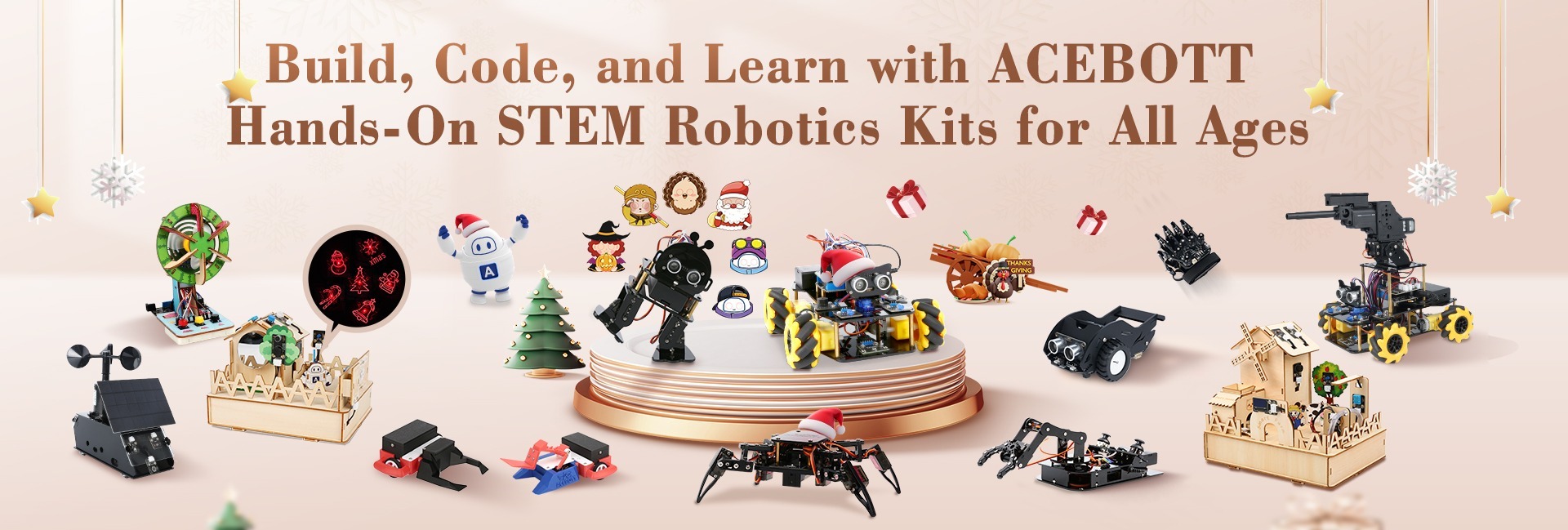
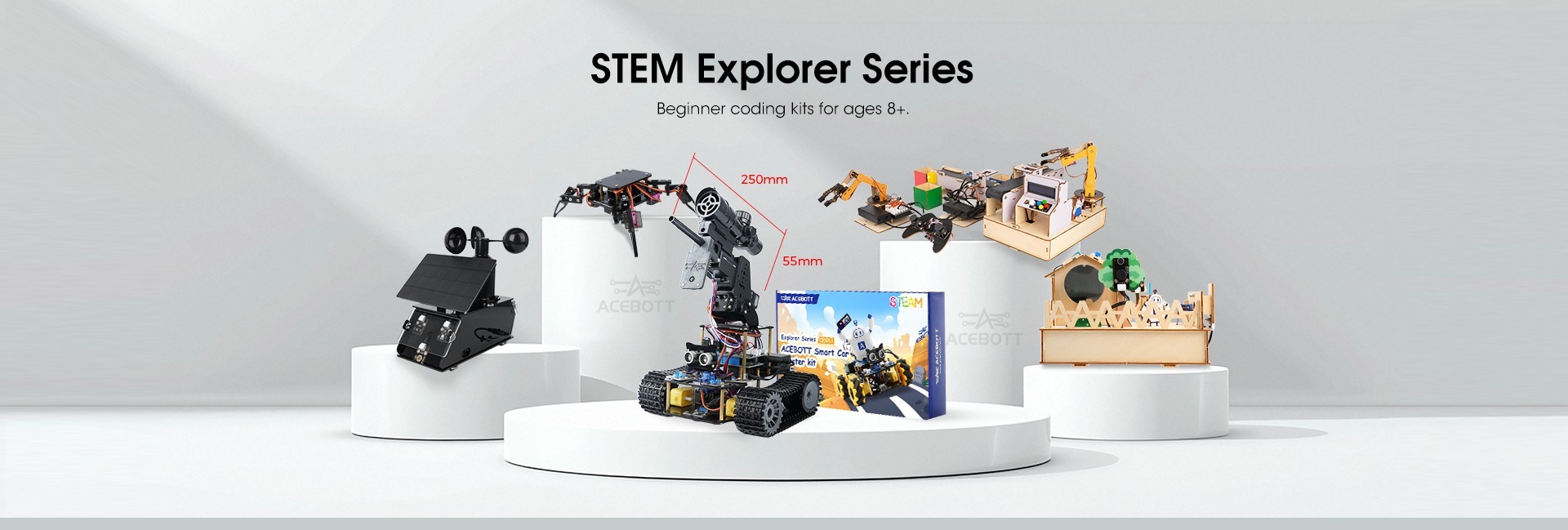
Every educational setting presents specific operational constraints, classroom durations, and learning objectives. Shenzhen Reachybott Co., Ltd. delivers three distinct product tiers engineered to optimize pedagogical impact and durability.
Core Flagship
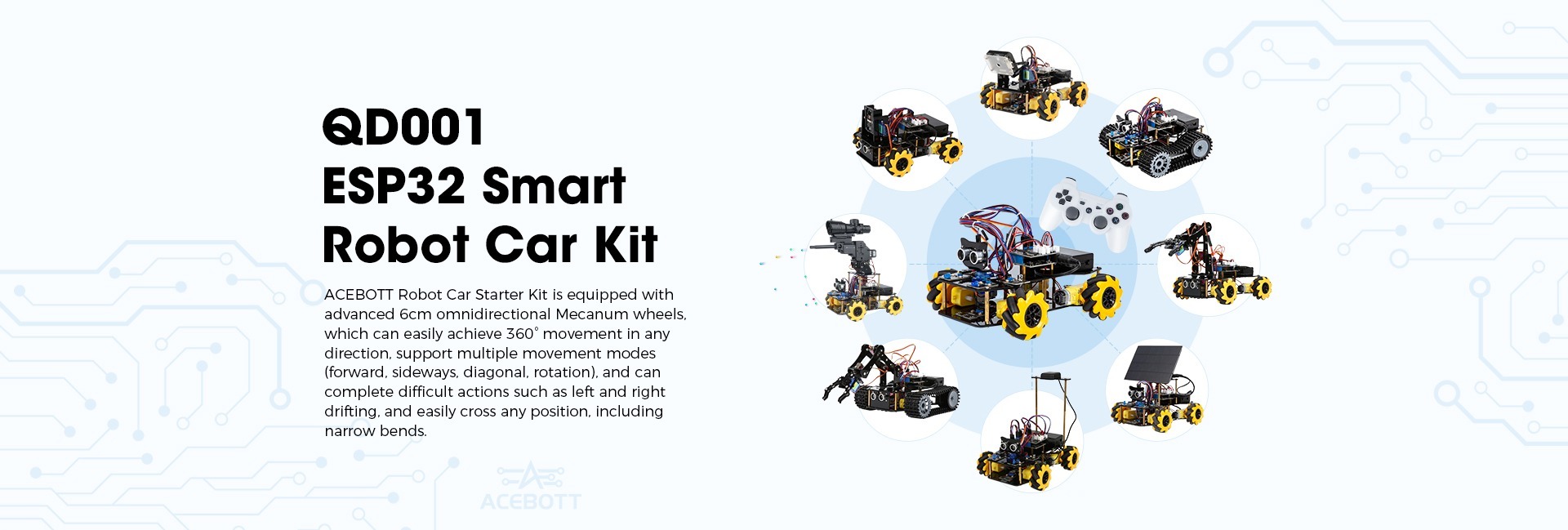
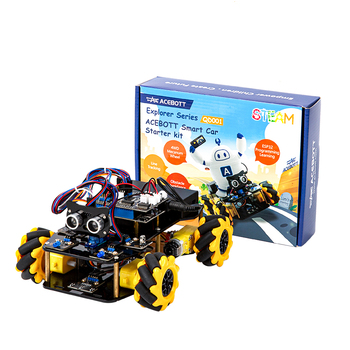
ESP32 Smart Omnidirectional Robot Kit
Our core mobile development platform featuring 4WD Mecanum kinematics, 5-channel line tracking arrays, HC-SR04 sonar ranging, and an integrated ESP32-WROOM-32E module. Pre-loaded with local AP web server control and BLE joystick modes.
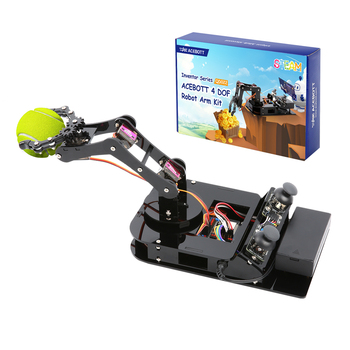
Built for industrial automation training, this desktop manipulator utilizes all-metal gear servos, digital feedback monitoring, and inverse kinematics solvers. Supports teaching-playback programming and remote teach pendants via browser.
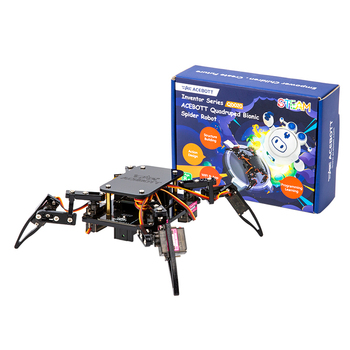
An eight-servo biomimetic robot engineered to teach dynamic balancing, gait generation matrices, and crawl kinematics. Encapsulated in lightweight, impact-resistant ABS composite chassis with onboard power protection.
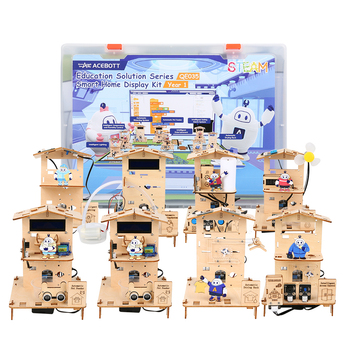
3-in-1, 5-in-1, and 8-in-1 modular environmental monitoring kits. Integrates laser-cut architectural models with gas sensors, passive infrared (PIR) detectors, RFID access control, and direct cloud dashboard publishing over MQTT.
System Architecture: Under the Hood of an Industrial-Grade Kit
The difference between a consumer hobby toy and a repeatable educational tool lies in power regulation, electromagnetic shielding, and signal integrity.
High-Efficiency Dual-Core Processing
The Xtensa dual-core 32-bit LX6/LX7 core clocks up to 240 MHz, delivering approximately 600 DMIPS computing power. One core operates low-level PWM timing loops and quadrature encoder pulse decoding, while the second core guarantees zero dropped packets across Wi-Fi TCP/UDP, BLE sockets, and RESTful web sockets.
Independent Dual-Rail Power Topology
Classroom environments run into frequent microcontroller brownouts when inductive DC motors stall. Shenzhen Reachybott boards feature isolated high-efficiency DC-DC step-down switching regulators: one dedicated 5V/3A channel driving motor driver H-bridges, and an ultra-low-dropout 3.3V LDO for the ESP32 module, eliminating reset loops.
Circuit Protection & Student Safety
Engineering for education requires robust fail-safes. Our boards include integrated self-resetting PTC polyfuses, reverse polarity protection diodes, ESD transient voltage suppression (TVS) diodes on all external I/O terminals, and short-circuit motor cut-off features protecting school property and student operators.
Detailed Technical Architecture Comparison of STEM Educational Robot Kits
Parametric Criteria
Legacy 8-Bit Architecture (ATmega)
Shenzhen Reachybott ESP32 Platform
Classroom Sourcing Impact
Processor Architecture
8-bit RISC @ 16 MHz Single Core
Dual-Core 32-bit Xtensa LX6/LX7 @ 240 MHz
Executes complex algorithms without stalling kinematics loops.
Allows expansion of robotic claws, ultrasonic sensors, and display screens simultaneously.
Table data validated through internal benchmarking at Shenzhen Reachybott Co., Ltd. quality testing laboratories.
Market Dynamics
Future Procurement Trends in the Global STEM Hardware Market
Global procurement cycles for ministries of education, international school networks, and distributors follow clear structural trends driven by AI integration and digital literacy mandates.
1. Shift from Closed-Loop Toys to Open Standards
Buyers are rejecting locked-down proprietary ecosystems that require expensive subscriptions. Educational boards worldwide now specify open-source hardware footprints, transparent schematic documentation, and non-proprietary C++/Python toolchains that deliver multi-year classroom life cycles.
2. Edge AI & Vision-First Sourcing Mandates
Standard line-following robot cars no longer meet competitive bidding tenders. Modern curricula require machine vision: AprilTag tracking, facial detection, traffic sign classification, and gesture-driven robot control—all possible via cost-effective ESP32-CAM co-processors.
3. Turnkey Curriculum Bundling
Hardware without curriculum is an operational liability for schools. Institutional buyers require end-to-end pedagogical solutions: student project guides, editable classroom PowerPoint slide decks, alignment with NGSS (Next Generation Science Standards), and clear rubrics.
Technology Roadmap
The Evolution of the ESP32 Smart Robot Kit Ecosystem
How the platform continues to outpace alternative microcontroller architectures in modern maker communities and engineering universities.
The progression of microcontroller development across STEM sectors has undergone three defining waves. Phase 1 relied entirely on monolithic 8-bit controllers suited for basic blinking circuits and single-motor PWM drive. Phase 2 saw auxiliary Wi-Fi chips added via unreliable serial AT command links. We are now firmly in Phase 3: homogeneous, unified AIoT system-on-chips.
Looking toward future architectures, Shenzhen Reachybott Co., Ltd. is embedding the latest silicon innovations across upcoming production runs. The transition toward ESP32-S3 and ESP32-C3 introduces vector instructions for accelerated neural network calculations, hardware cryptography acceleration, and native USB OTG debugging. This enables children and university undergraduates alike to execute real-time speech recognition and obstacle trajectory prediction right on the chassis.
Furthermore, cloud connectivity through secure MQTT broker connections and Matter protocol interoperability will allow future classroom robots to interact seamlessly with smart building devices, turning educational classrooms into smart city micro-laboratories.
Engineered in Shenzhen: Why Partner with Shenzhen Reachybott Co., Ltd.
Located in Shenzhen's hardware heartland, our integrated campus bridges industrial-scale electronics assembly with rigorous pedagogical testing.
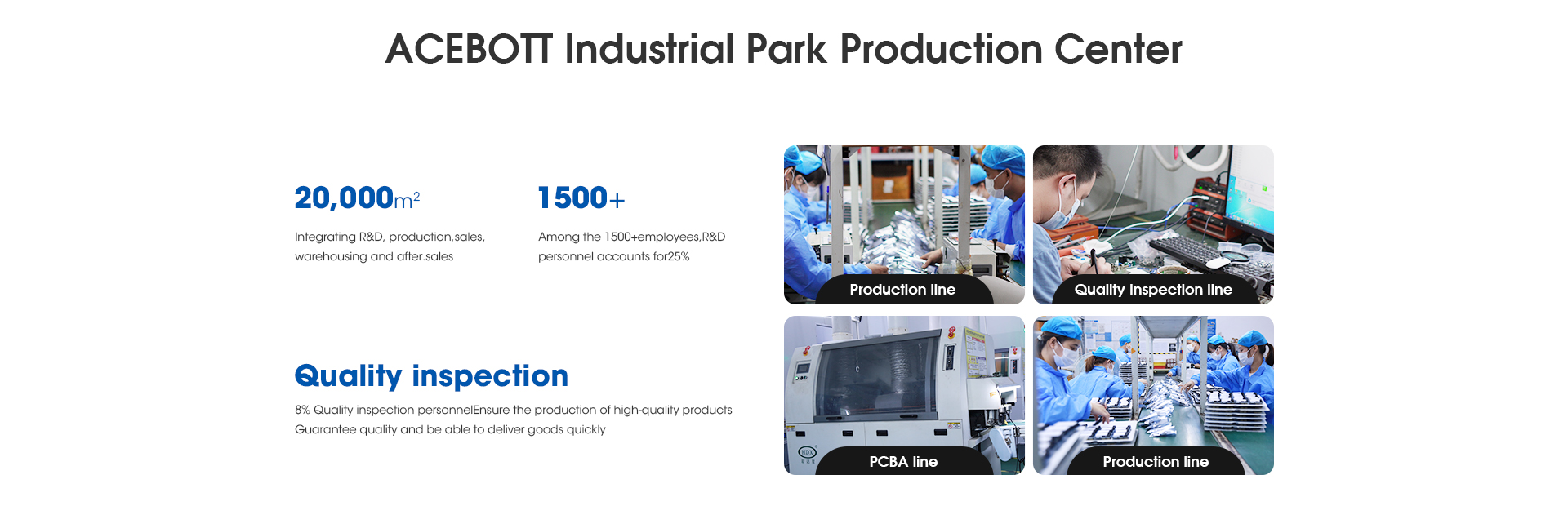
Modern 3,000 m² Production Facility
Operating high-speed SMT placement lines, automated optical inspection (AOI), dual-wave soldering systems, and dedicated multi-stage burn-in aging rooms that guarantee 99.6% first-pass yields across hundreds of thousands of boards annually.
Full Turnkey OEM / ODM Capability
We do not merely supply generic boxed parts. We build customized PCB silkscreens, tailored hardware shield configurations, localized multilingual student manuals, custom foam-insert injection packaging, and dedicated classroom storage bins.
International Compliance Assured
Safety is critical for youth physical computing. Every Reachybott SKU is fully tested for CE-RED, FCC ID, RoHS 2.0, and EN71 physical and mechanical toy safety compliances, facilitating customs clearance into North America and European territories.
Real World Trust
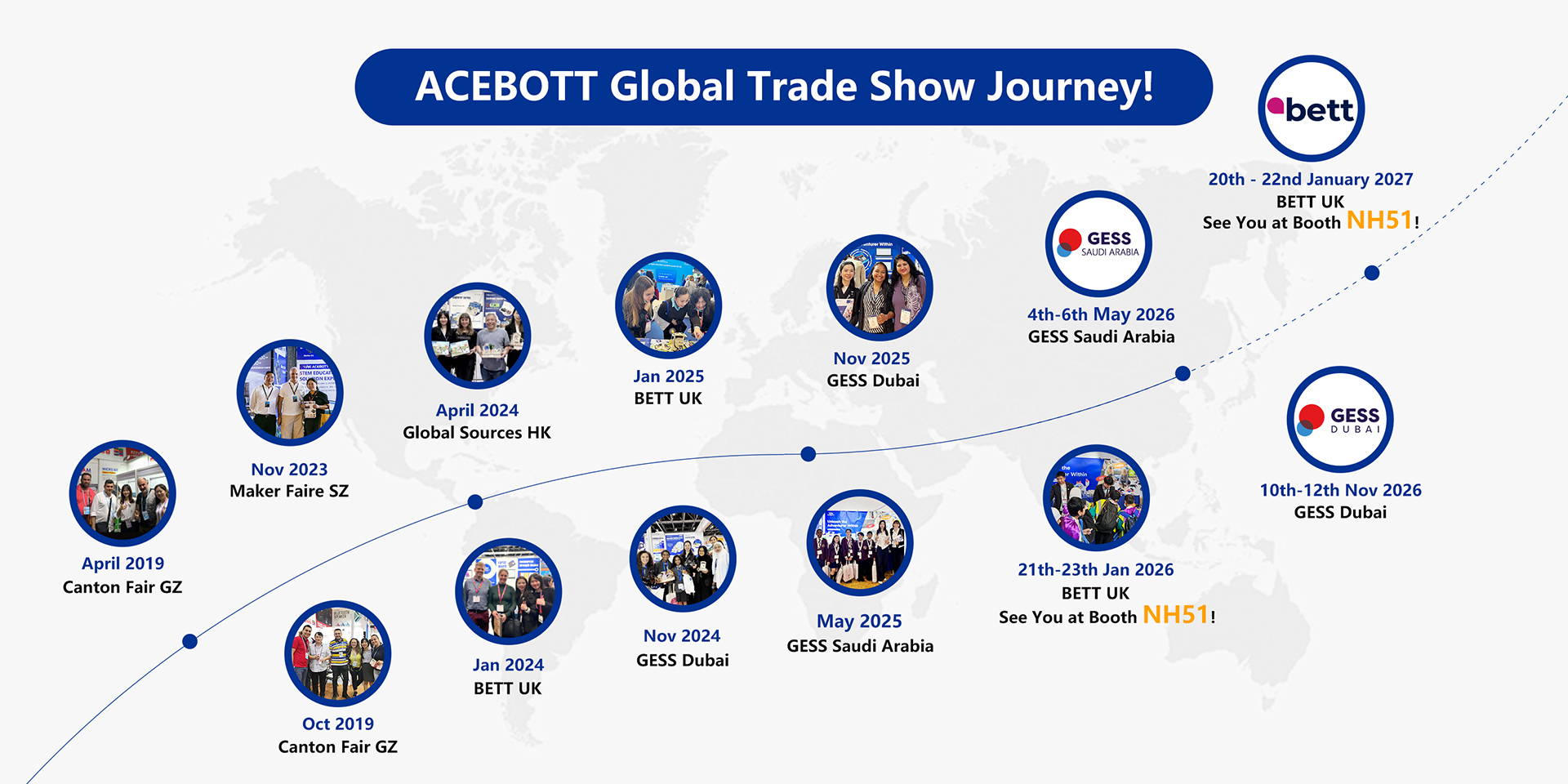
Maker Community Adoption & Global Classroom Deployment
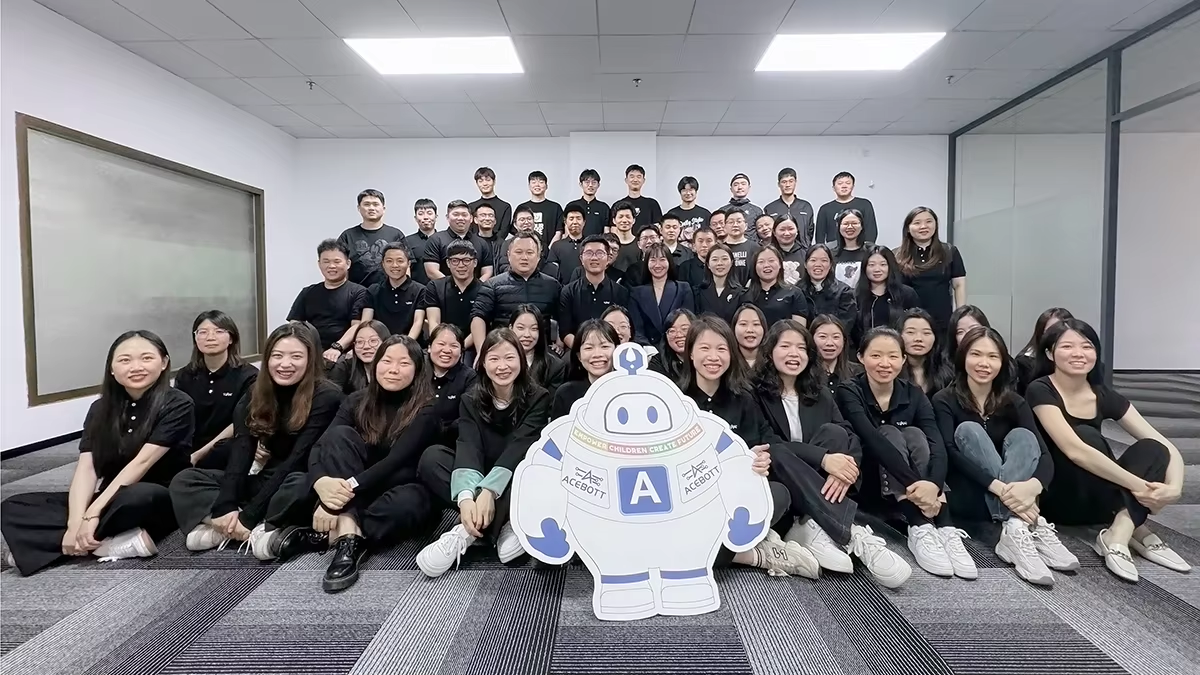
See our robots deployed across university robotics labs, maker competitions, and interactive student classrooms.
Frequently Asked Questions by Global B2B & Educational Buyers
Addressing the technical, operational, and commercial questions sourcing agents frequently ask our engineering team.
Why should institutional buyers choose an ESP32 smart robot kit over legacy 8-bit platforms?
Legacy 8-bit microcontrollers (such as ATmega328P chips) run at 16 MHz with only 2 KB of SRAM, leaving zero compute headroom for networking or multi-tasking. The ESP32 provides a dual-core 32-bit processor running up to 240 MHz with 520 KB SRAM and native 2.4 GHz Wi-Fi and Bluetooth. This allows one core to manage motor PWM and PID control loops, while the second core runs an on-chip web server, WebSocket telemetry, and wireless video streaming without stalling the robot. For school buyers, this ensures hardware remains pedagogically relevant for 5 to 7 years.
What OEM/ODM customization services does Shenzhen Reachybott Co., Ltd. offer?
We provide full white-label and bespoke development options. For hardware, we customize PCB layout, silkscreen client logos, modify sensor configurations, and build customized acrylic or injection-molded chassis. For branding and software, we provide custom outer retail boxes, high-density EVA organizing foam, localized student manuals in multiple languages, and pre-flashed client firmware configured to auto-connect to school Wi-Fi networks.
How do your kits ensure electrical safety and classroom durability?
Student safety and classroom reliability are engineered directly into our circuit boards. Mainboards integrate reverse polarity protection, PTC self-resetting polyfuses against short circuits, ESD protection diodes, and isolated high-efficiency DC-DC step-down converters that separate motor noise from microcontroller logic. Every kit meets CE-RED, FCC ID, RoHS, and EN71 international safety regulations.
What programming platforms and educational frameworks are natively supported?
Our kits follow an incremental learning curve. Elementary learners start with Scratch 3.0 drag-and-drop block coding. Intermediate students transition to the Arduino IDE using standard C/C++. Advanced and university-level students utilize MicroPython, the official Espressif ESP-IDF environment with FreeRTOS, and micro-ROS nodes for robotics middleware research. Complete open-source code libraries and schematics are included.
What are the typical sample lead times, volume MOQs, and delivery terms?
Sample evaluation units ship from our Shenzhen facility within 24 to 48 hours with full documentation. For standard branded products, minimum order quantities start at 1 unit for testing and evaluation. For custom OEM/ODM packaging and silkscreens, MOQ ranges between 100 to 500 units. Mass production delivery is completed within 15 to 25 business days. We support FOB, CFR, CIF, EXW, FCA, CPT, CIP, DDP, and DDU shipping terms.
Ready to Elevate Your STEM Educational Hardware Lineup?
Partner with Shenzhen Reachybott Co., Ltd. for direct factory pricing, robust hardware architectures, and end-to-end OEM customization. Connect with our engineering sales team today.