1 / 5
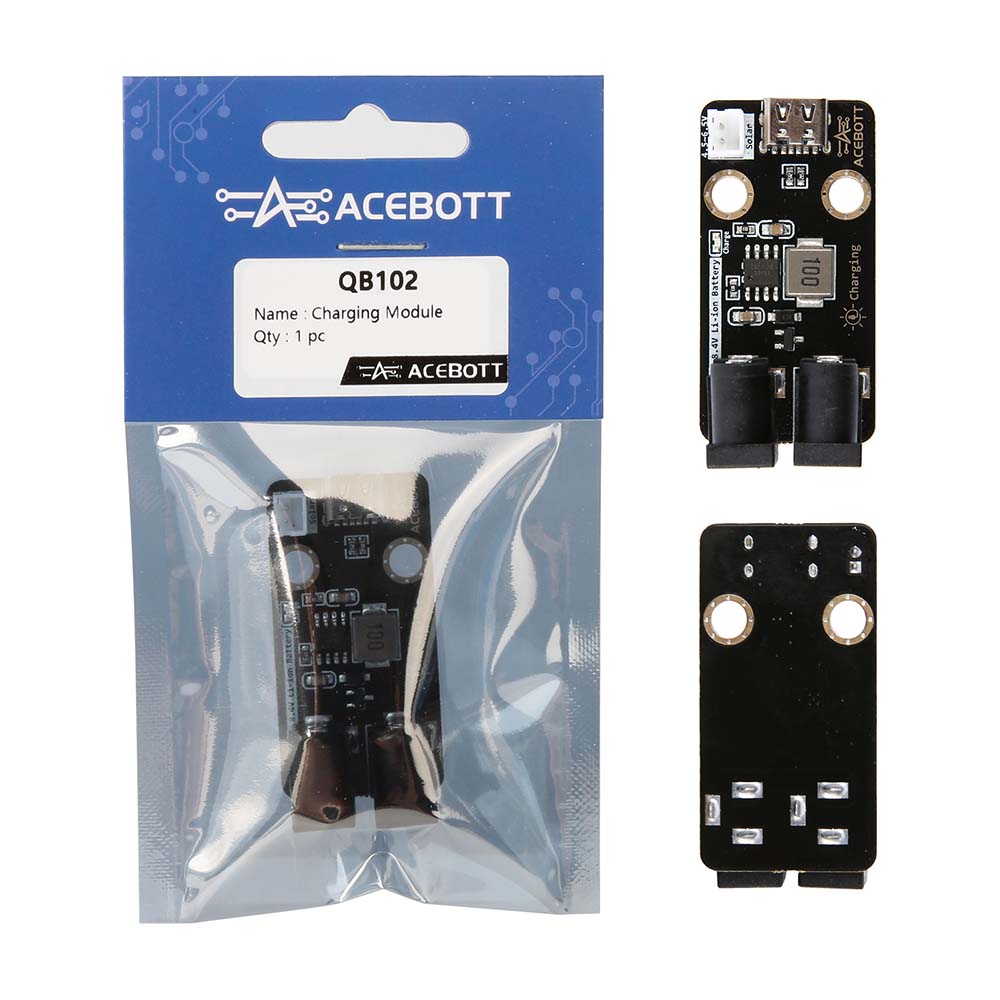
Charging module is a project for the Internet of Things and renewable energy, providing safe and efficient embedded solar power management modules for makers and application engineers. The charging module has the function of solar energy charging, which can use solar energy to charge lithium batteries under certain light conditions, and has the function of power protection, providing efficient and reliable power management for various solar energy projects.
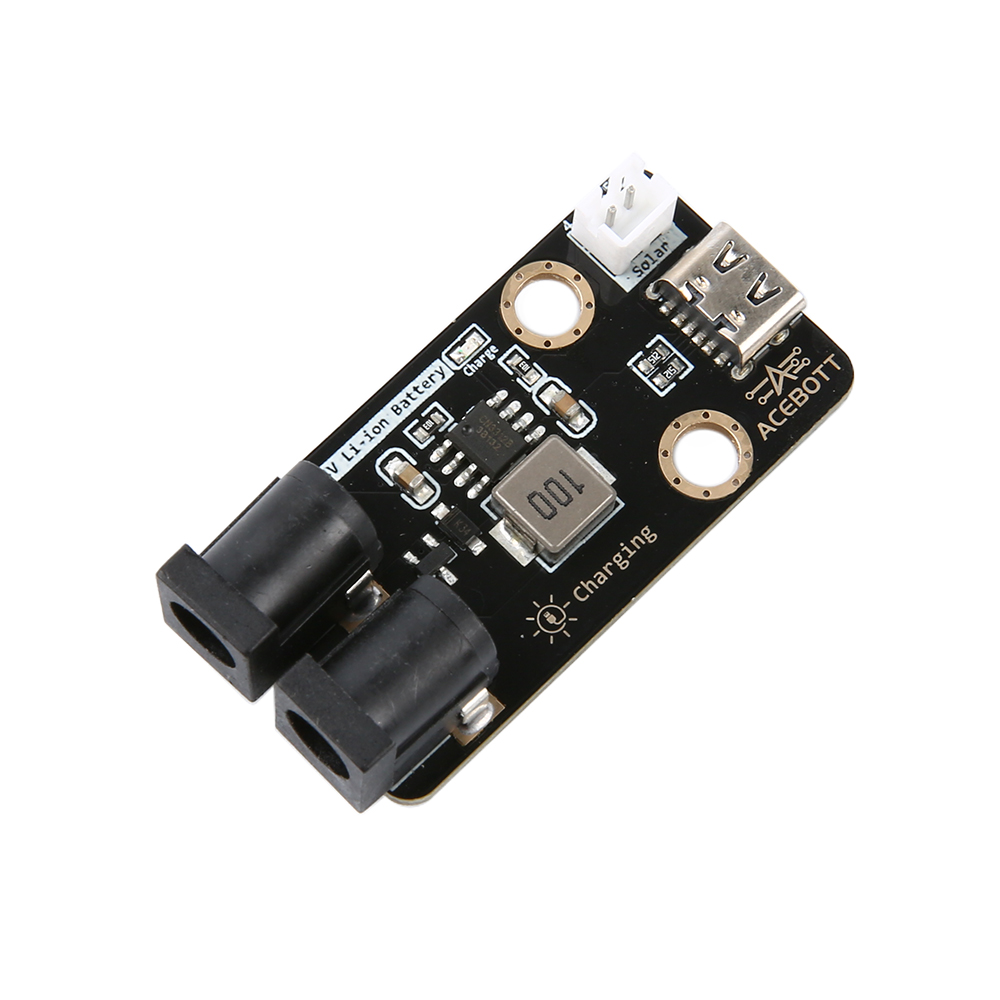
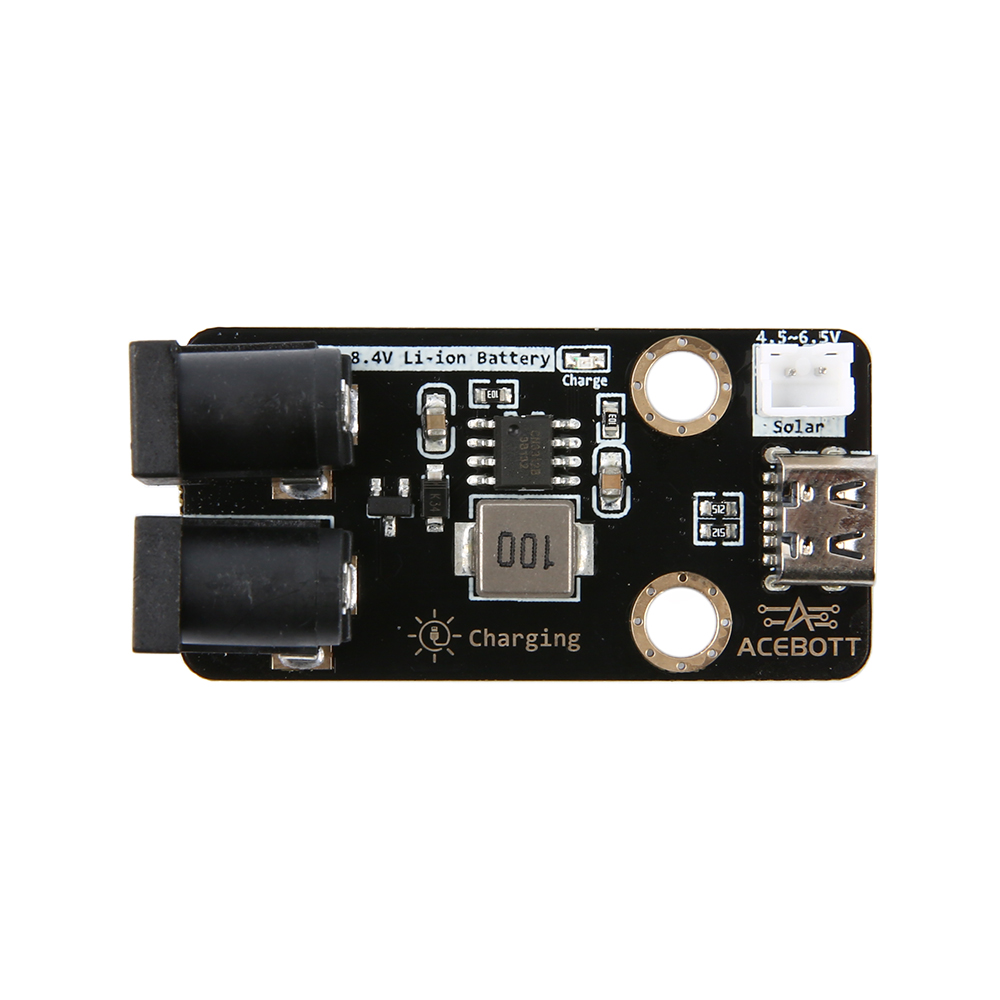
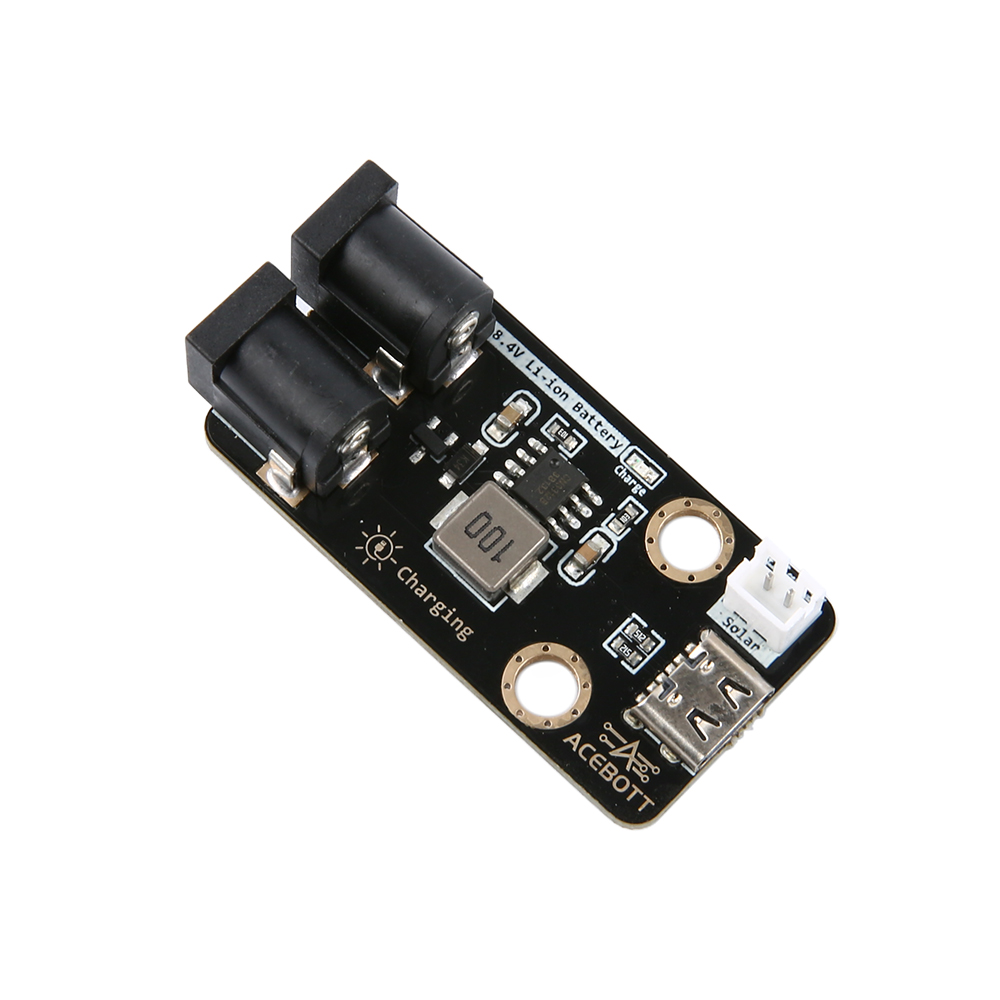
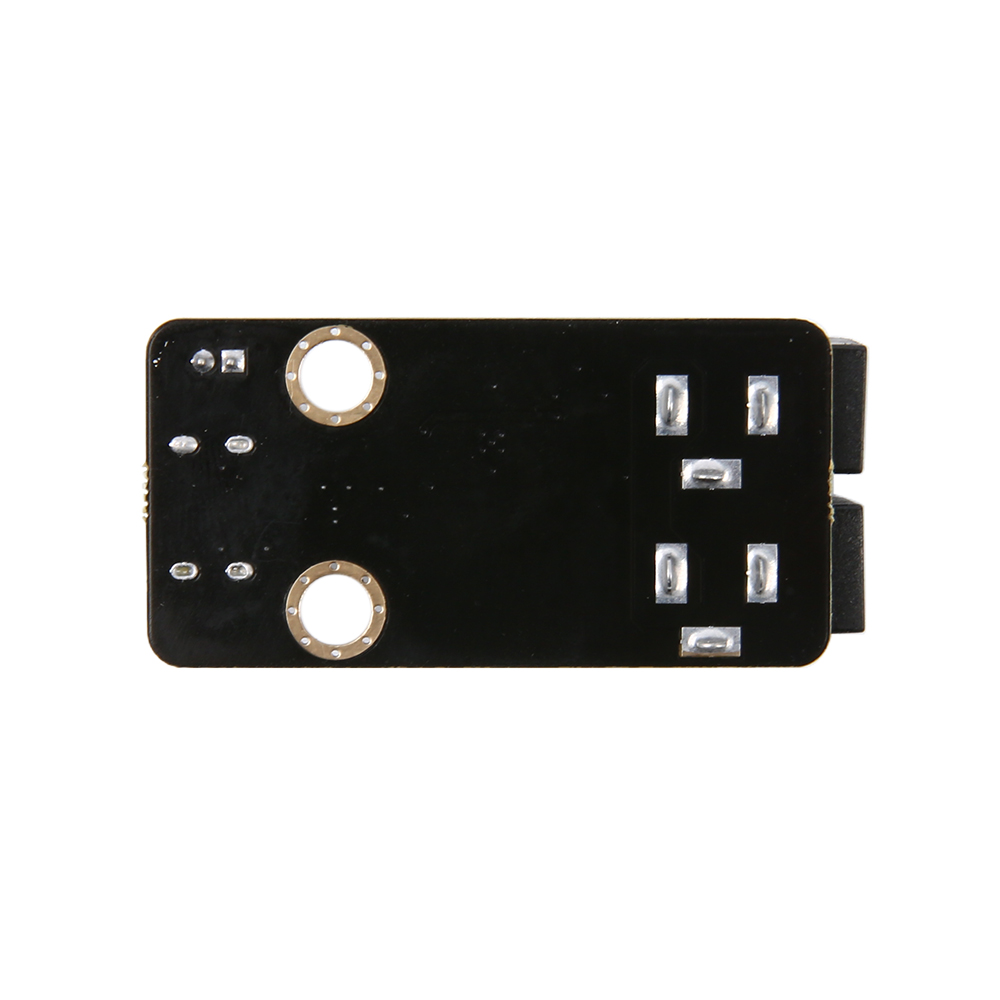
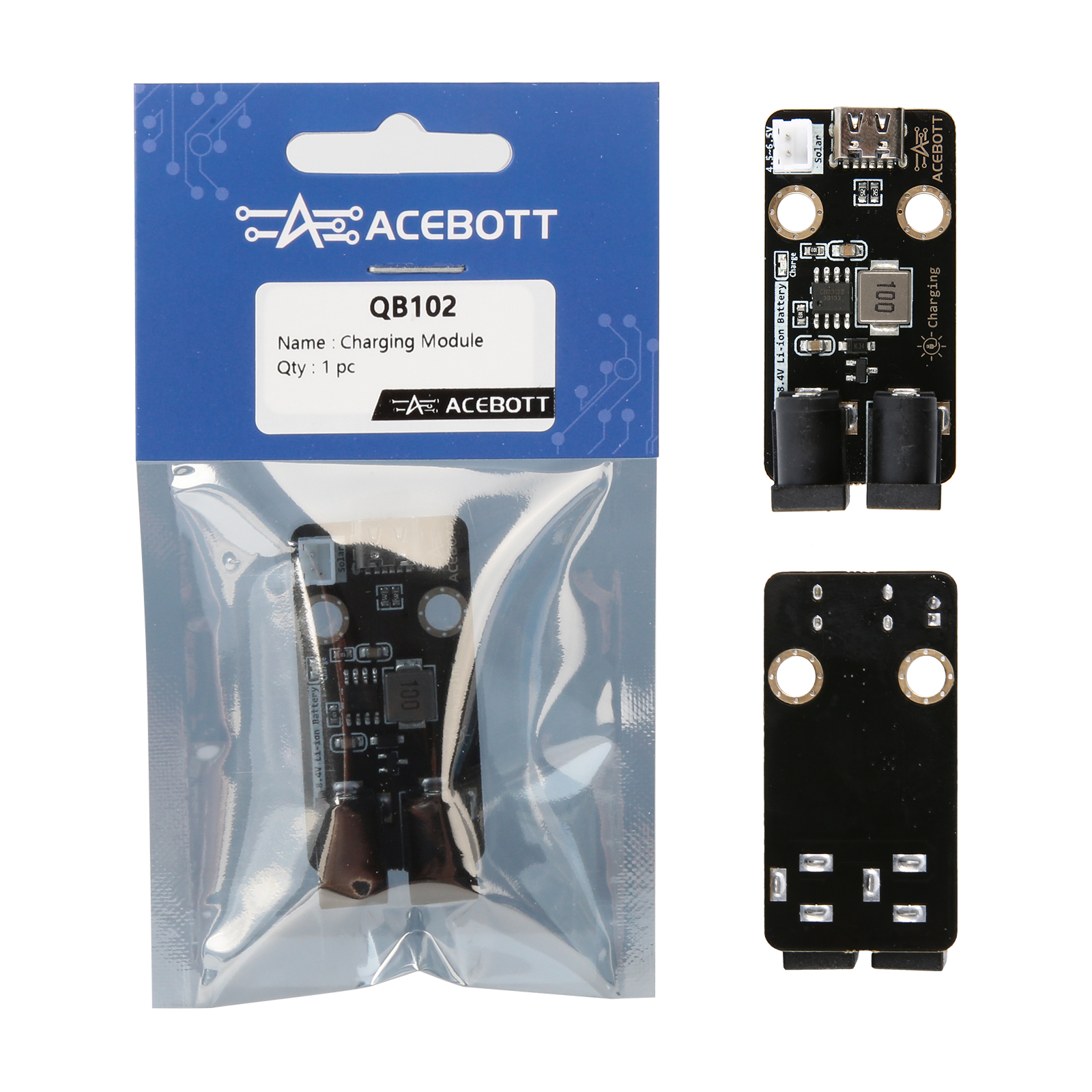
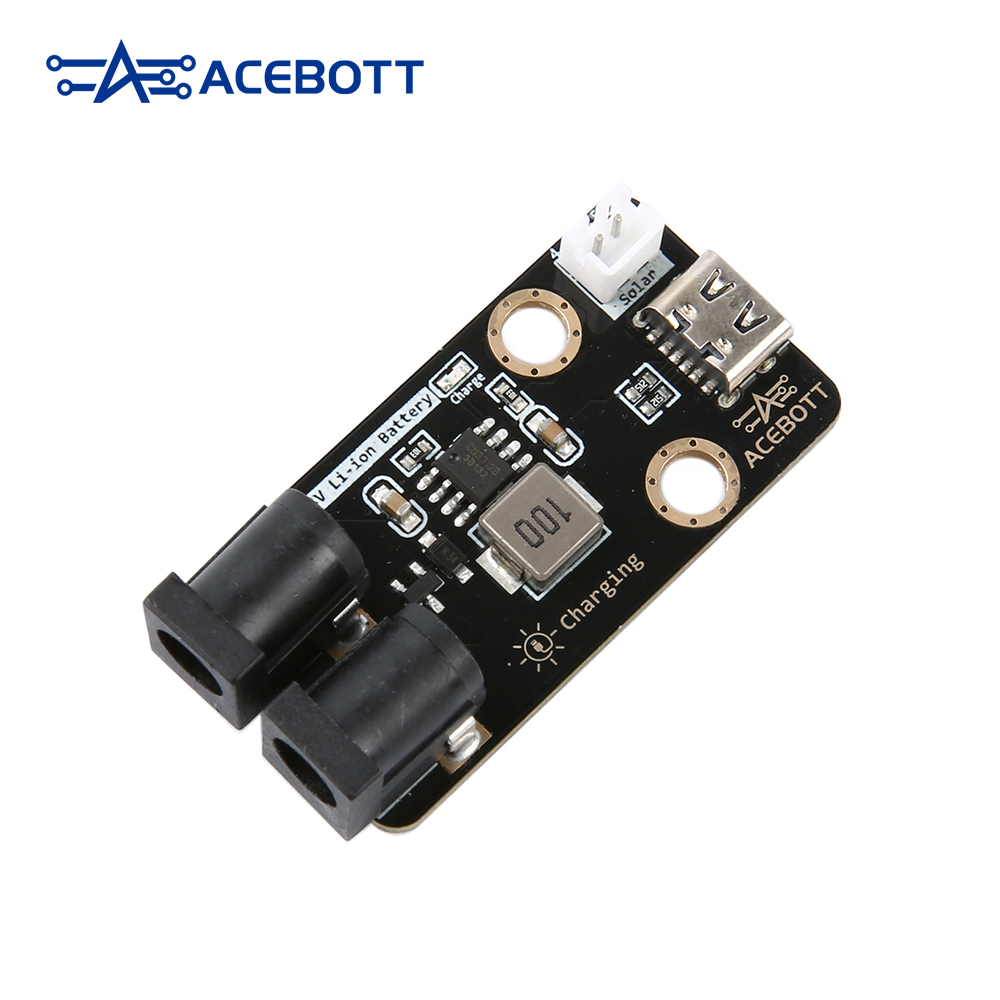
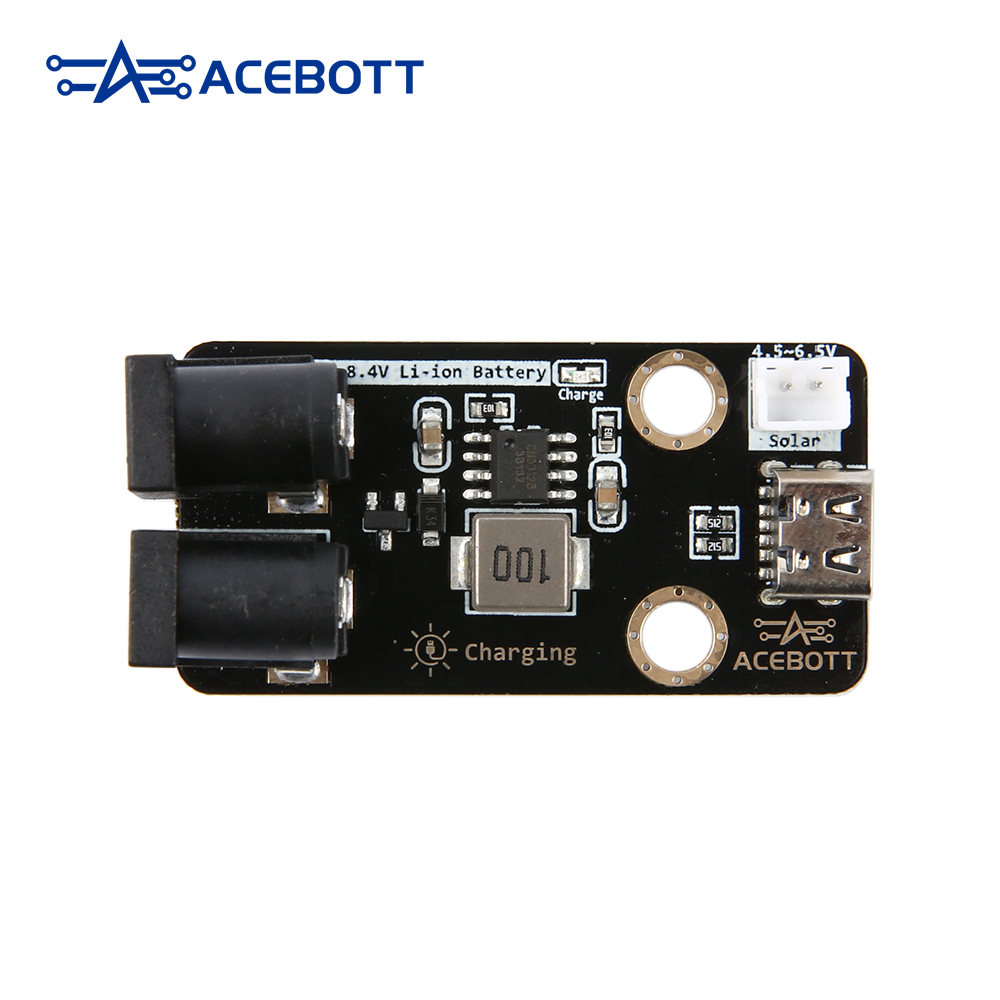
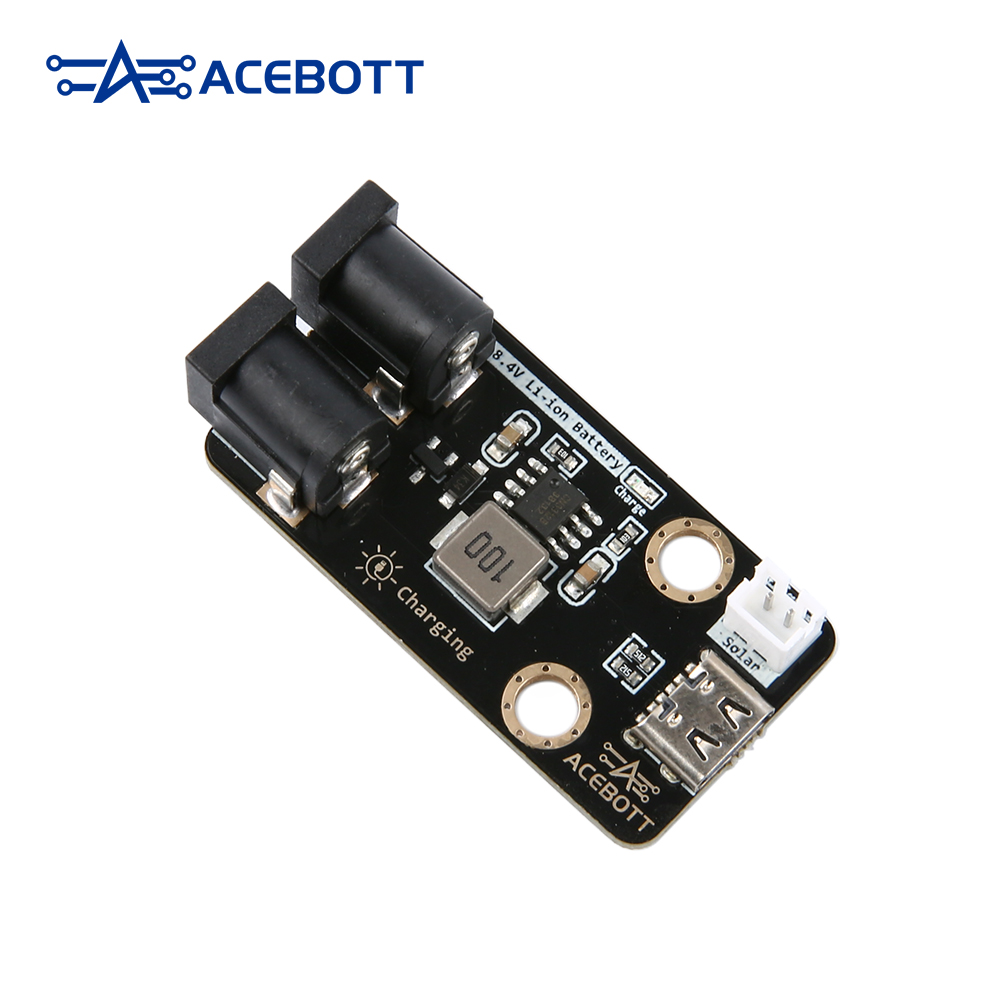
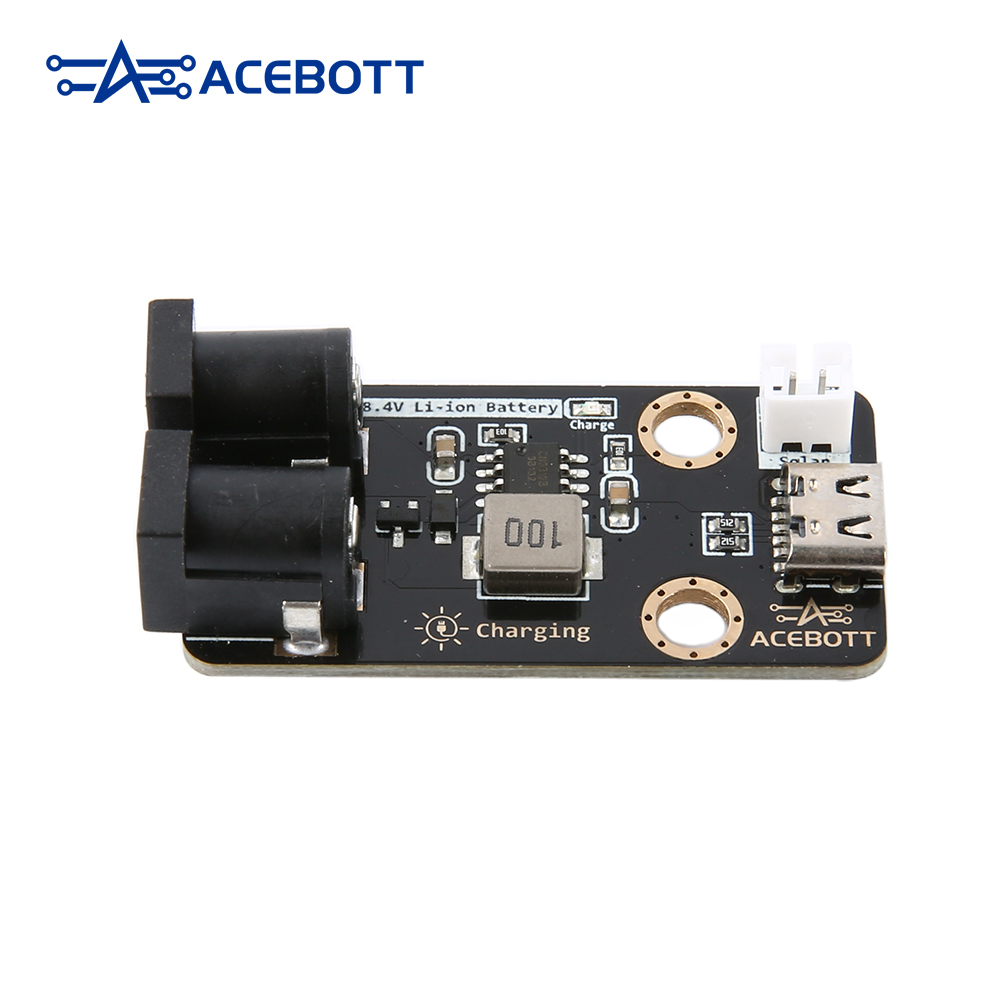
Charging module is a module used for charging lithium battery with a standard voltage of 7.4V and a full voltage of 8.4V in double section series state. The charging module contains two 5.5X2.1mm power block DC power ports, which can input power to the lithium battery and to the controller board; A Type-C interface to connect the charging head (not more than 5V) input power; A solar panel connector to connect the solar panel input power supply; And an LED display light to display the charging status.
| Operating voltage | 4.5V~6.5V |
| Battery type available for charging | 7.4V double section series lithium ion battery |
| Charging current | 900mA Max |
| Charging cut-off voltage | 8.4V±1% |
| Maximum static power consumption | <1 mA |
| Operating temperature | -40°C~+85°C |
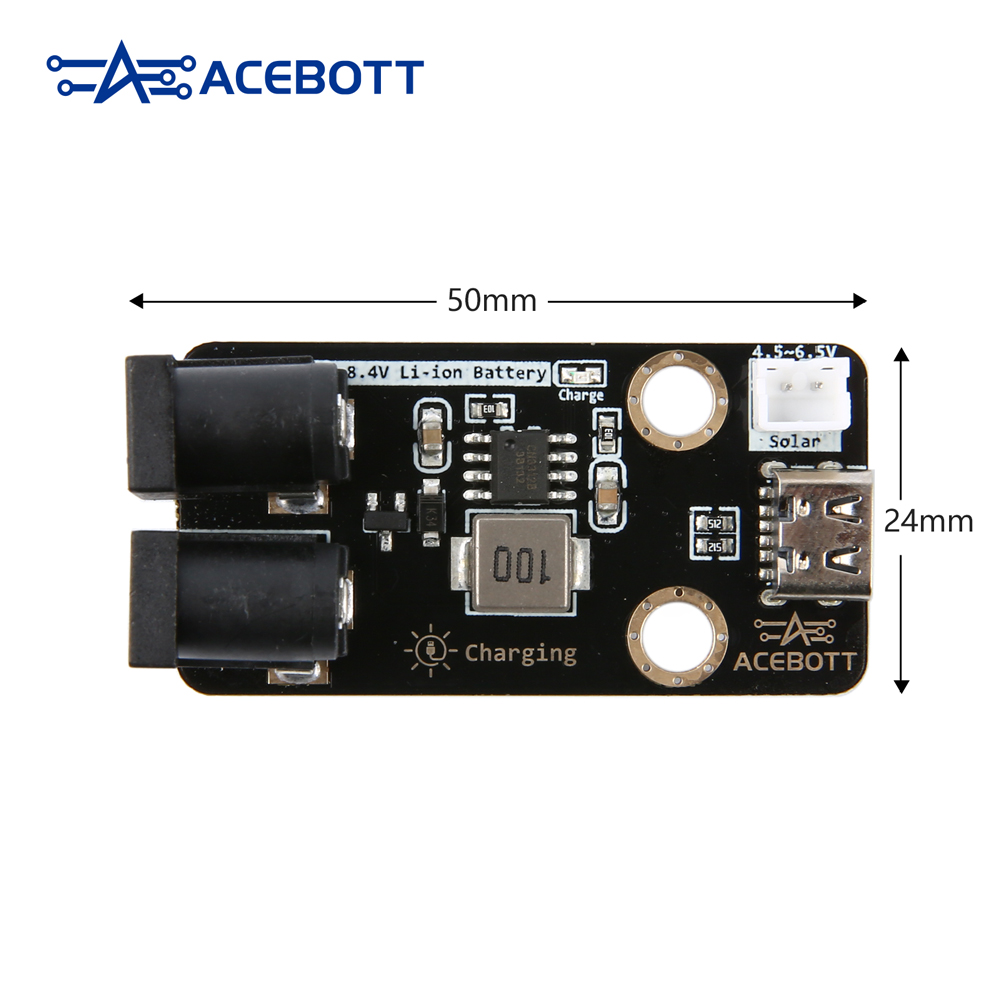
| Size | 5.0cm*2.4cm |

| Charging Module | ESP32 / Battery box / Solar panel |
| DC 1 | On-board power supply port |
| DC 2 | Battery box interface |
| Solar interface | Solar panel |






It is designed for 7.4V double section series lithium-ion batteries, featuring a standard voltage of 7.4V and a full charging cut-off voltage of 8.4V±1%.
The module supports an operating voltage of 4.5V~6.5V and provides a maximum charging current of 900mA Max.
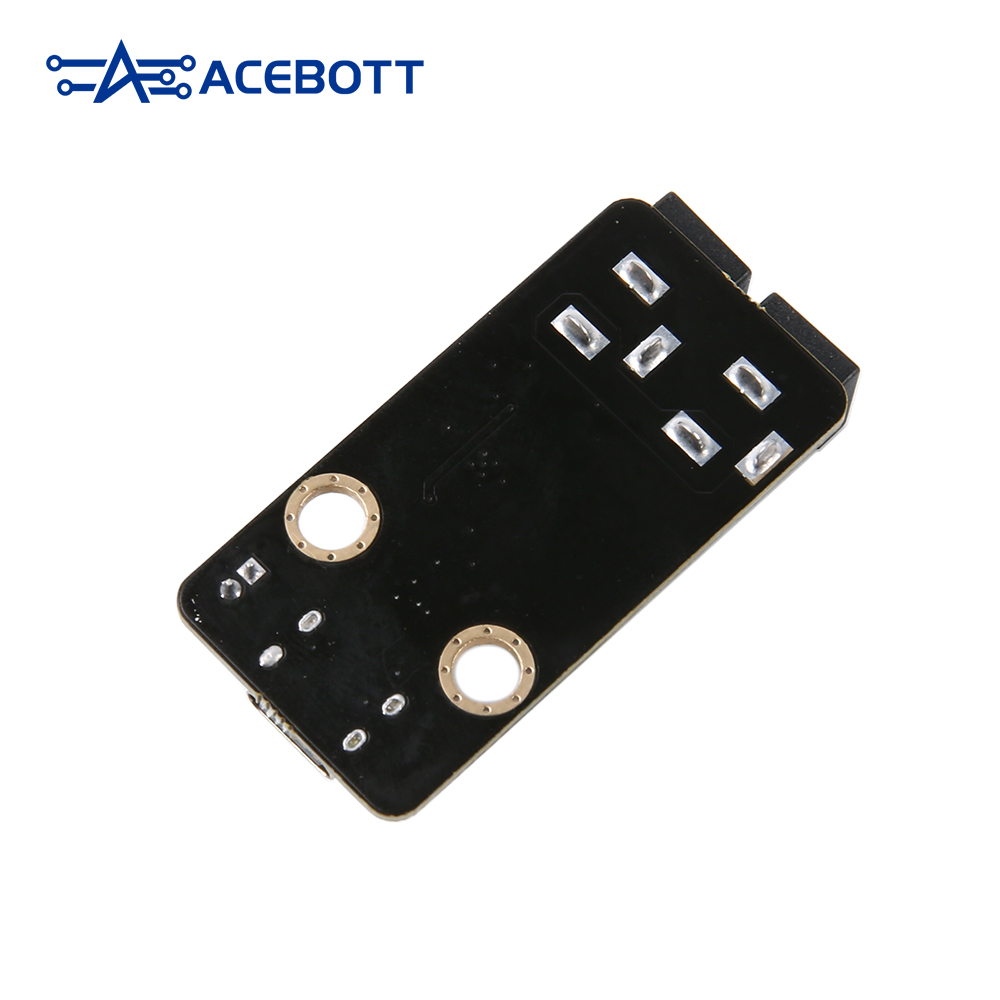
The module includes two 5.5X2.1mm DC power ports (for battery and controller board input/output), a Type-C input port (not exceeding 5V), a dedicated solar panel connector, and an LED status indicator.
Common application scenarios include solar cars and robots, solar intelligent environmental monitoring systems, and small solar street lamps.
The board measures 5.0cm * 2.4cm and operates across a temperature range of -40°C to +85°C with a maximum static power consumption of less than 1 mA.